
November 7th is Canine Lymphoma Awareness Day. This is a day dedicated to helping dog families recognize the signs of lymphoma, understand how it affects dogs and learn what to expect from lymphoma treatment. With those goals in mind, I’ve written today’s blogpost to answer common questions about canine lymphoma, one of the most frequently diagnosed types of canine cancer.
What is canine lymphoma?
To put it simply, lymphoma is a cancer of the immune system’s lymphocytes—white blood cells that play a key role in fighting infection. But cancer is never simple. The immune system consists of a fleet of cells, each with a different function, and any of those cells can turn cancerous. Thus, lymphoma is not a single disease, but rather a universal term encompassing a group of 20-30 different cancers, each with its own prognosis and often with its own treatment.
Where does lymphoma occur in dogs?
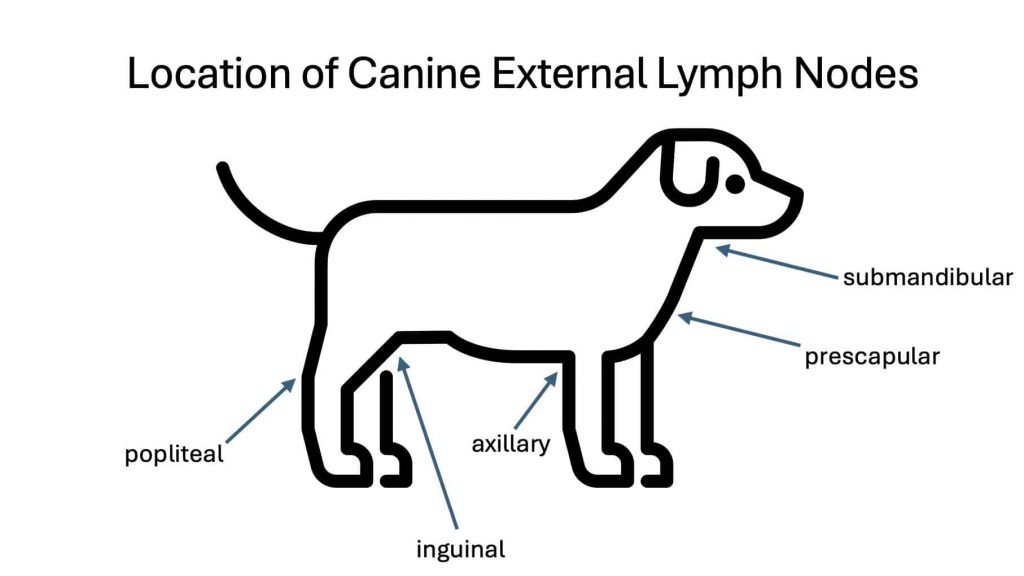
Because immune system cells travel around your dog’s body protecting it against infection, lymphoma can develop in any part of the body and in any organ. The most common form of canine lymphoma arises in the lymph nodes of a dog, which are distributed throughout a dog’s body, as illustrated by the diagram below. If your dog develops lymphoma in the lymph nodes, you might feel lumps in these locations. The lumps will not be painful, but lymphoma can make a dog feel sick resulting in a decreased activity level and appetite.
Dogs also have lymph nodes inside their bodies. Veterinarians use x-ray or ultrasound to identify abnormal growth in these nodes.
Lymphoma cells can also infiltrate and prevent organs from functioning normally. If lymphoma infiltrates the intestine, we will see vomiting and diarrhea. If it infiltrates the liver, we will see jaundice and elevated liver tests on a blood panel. When lymphoma occurs in the chest, fluid can accumulate around the lungs and cause breathing problems.
How is lymphoma diagnosed?
Lymphoma is usually not difficult to diagnose. A veterinarian will collect a sample using fine needle aspiration—a simple, minimally invasive procedure—then the lymph node cells will be evaluated by a pathologist using a microscope.
Then there are the more challenging cases. When fine needle aspiration results are inconclusive, a biopsy may be required. This means surgically removing a lymph node for more detailed evaluation. Sometimes, the biopsy needs to be evaluated by multiple pathologists or advanced testing is required to confirm a diagnosis of lymphoma. Practicing good medicine can sometimes be slow and frustrating for pet owners and veterinarians alike, but accurate diagnosis is essential to effective treatment.
Can lymphoma be treated with surgery?
Surgery may be used to remove a lymph node as a diagnostic procedure, but surgery is not typically used as a treatment for canine lymphoma. Because lymphoma is a cancer that has the potential to involve the entire body, chemotherapy is the logical treatment option.
What is chemotherapy like for dogs?
Chemotherapy for dogs is much better tolerated than many people expect.
There are multiple treatment protocols for canine lymphoma. Veterinary oncologists tailor the plan to fit each dog and their family—some regimens are shorter or longer, and may use one or multiple drugs.
As I wrote about in a previous blogpost about chemotherapy drugs, studies show that while families often worry about side effects before treatment, most report that once it began chemotherapy was far less difficult than anticipated.
Can you use radiation to treat lymphoma?
Yes, radiation therapy can be helpful in some cases. It’s often used in two ways to treat lymphoma:
Localized radiation. If there is a single location of lymphoma causing pain or loss of function, we might complement chemotherapy with targeted radiation to control that site.
Half-body radiation. To try and extend the survival times that can be achieved with chemotherapy, radiation oncologists use a technique called half-body irradiation. This is a bit of a misnomer since the protocol treats the whole dog, but only half the dog is treated at one time. For dogs entering a complete remission, using chemotherapy and adding radiation therapy using this protocol prolongs survival.
Final Thoughts
I hope you are never faced with a diagnosis of lymphoma in your dog, but if you are, I hope this FAQ helps you understand what’s happening and what to expect. With today’s advances in veterinary oncology, dogs with lymphoma can enjoy good quality of life for months to years with the right care and support.