
Senior Dog With Dementia Startles At Night, Family Shares Heartbreaking Reality Of Loving Her Through It
For nearly seven years, Lulu has been a cherished part of Desiree Broomer’s family. Now almost fourteen years old, the senior pup was adopted after a fragile beginning filled with uncertainty. Her previous owner had planned to surrender her to a shelter before moving out of state, but Broomer’s family stepped in and offered Lulu a safe, loving home instead. Over time, she transformed into a deeply treasured companion, especially meaningful after the difficult start she endured.
As Lulu has grown older, age has introduced challenges her family never expected. About a year ago, subtle changes began to appear. She started pacing at night and showing signs of confusion that gradually became more noticeable. Eventually, the family learned that Lulu was showing symptoms consistent with canine cognitive dysfunction, often referred to as dog dementia.
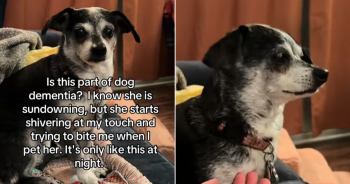
Recently, Broomer shared an emotional TikTok video capturing one of Lulu’s nighttime episodes. In the clip, Lulu sits on the sofa as Broomer gently reaches out to comfort her. Instead of relaxing, Lulu flinches, trembles, and reacts as if suddenly startled. At one point, she even moves as though she might lightly bite, but she stops herself and continues shaking. Broomer explained that these episodes mostly happen at night and appear to be linked to sundowning, a condition in which confusion and agitation intensify in the evening hours.
Watching Lulu struggle has taken an emotional toll on the family. They work carefully to keep her environment calm and predictable, knowing routine helps reduce confusion. Broomer has also introduced calming supplements commonly recommended for senior dogs and is committed to keeping Lulu as comfortable and secure as possible as her condition progresses.
Veterinarians explain that canine cognitive dysfunction can present in many ways. Common symptoms include nighttime restlessness, pacing, disorientation, irritability, sudden clinginess, and changes in sleep patterns. These behaviors are not signs of aggression but reflections of fear and confusion as cognitive decline affects the dog’s perception of the world. While there is no cure, medication, supplements, and supportive care can help slow progression and improve quality of life.
The response to Broomer’s video has been overwhelmingly compassionate. Thousands of viewers shared their own experiences with aging dogs, offering empathy, comfort, and gentle advice. Many encouraged regular veterinary checkups to rule out pain, vision loss, or other medical issues that can worsen nighttime anxiety. Others simply expressed gratitude to Broomer for showing such patience and unwavering love.
Through every difficult moment, Broomer remains devoted to Lulu with steady tenderness. Caring for a dog with dementia requires resilience, understanding, and deep emotional strength, and she is determined to give her beloved senior companion the peace, dignity, and love she deserves in her final years.
Click the video below to watch the full story:
@scarlettandlouThe nights are hard for this old lady.
The post Senior Dog’s Nighttime Dementia Symptoms Break Hearts appeared first on iHeartDogs.com.