
I hear a great deal of confusion from pet families about the role of veterinary internal medicine specialists. Much of this confusion seems to come from trying to map human medicine definitions onto veterinary specialists. For example, my personal physician—the doctor I see for routine care such as flu vaccines, cholesterol monitoring and the occasional minor illness—is a board-certified internal medicine specialist with expertise in primary care.
In veterinary medicine, however, board-certified internal medicine specialists (like those at the Schwarzman Animal Medical Center) do not typically provide routine care. Instead, they have additional training and skills to diagnose and manage complex medical conditions. In today’s blogpost, I will use the examples of pancreatic diseases to illustrate what a veterinary internal medicine specialist does and why their expertise matters.
Pancreatic Structure: A Dual-Purpose Organ
The pancreas is a complicated organ with two major functions:
Hormone production, including insulin
Digestive enzyme production, including trypsin
Either function of the pancreas can develop a disease, and the clinical signs and treatment depend on which part of the pancreas is not working well. AMC’s internal medicine specialists are trained to diagnose and manage both hormone and digestive diseases.
When Insulin is Lacking: Diabetes Mellitus
When the pancreas cannot produce enough insulin, the patient develops high blood sugar, also known as diabetes mellitus. Pets with diabetes may require hospitalization, especially if ketones are present, a common abnormality in pets with uncontrolled diabetes.
At AMC, internal medicine specialists manage diabetic pets during their hospital stay. Their expertise includes:
Selecting the right insulin for your pet
Using glucose monitors to fine-tune the insulin dosing regime
Ordering and interpreting blood tests to determine the success of the insulin treatment.
Once your cat or dog is on a stable treatment regimen, your primary care veterinarian will often take over diabetes management.
Read more about Diabetes Mellitus in canine patients and feline patients in our Pet Health Library.
Pancreatitis: Inflammation of Pancreas
Pancreatitis—inflammation of the pancreas—is another common disorder of the pancreas and may be associated with diabetes.
In dogs, risk factors include:
A high fat meal (often from overindulging in human food scraps or waste)
Steroid administration
Being a Schnauzer
In cats, the causes are less clear, but trauma from a fall (referred to as “high rise syndrome”) is one known contributor.
Pancreatitis in cats is often associated with inflammatory bowel disease and inflammatory liver disease. When this trio of diseases occurs together, veterinary internal medicine specialists call the condition “triaditis.” Internal medicine specialists are uniquely qualified to manage triaditis. Their management expertise includes:
Endoscopy to diagnose inflammatory bowel disease
Bile testing to determine optimal treatment for liver inflammation
Nutritional therapy to manage pancreatitis
When Enzymes are Missing: Exocrine Pancreatic Insufficiency (EPI)
Exocrine Pancreatic Insufficiency (EPI) refers to inadequate production of digestive enzymes by the pancreas. EPI occurs in both dogs and cats, though it is far less common than pancreatitis. It is one of many diseases that cause weight loss and diarrhea. Since diarrhea is such a common clinical sign, it often takes a substantial investigation to diagnose EPI. Treatment involves supplementing the missing enzymes.
Pancreatic Cancer
Two types of cancer occur in the pancreas:
Insulinoma, affecting insulin-producing cells
Pancreatic adenocarcinoma, affecting digestive enzyme producing cells
While internal medicine specialists would not treat these cancers directly, they play a crucial role in making a diagnosis, using special tests such as ultrasound to identify the tumor and blood tests to measure insulin levels.
The Broad Expertise of Internal Medicine Specialists
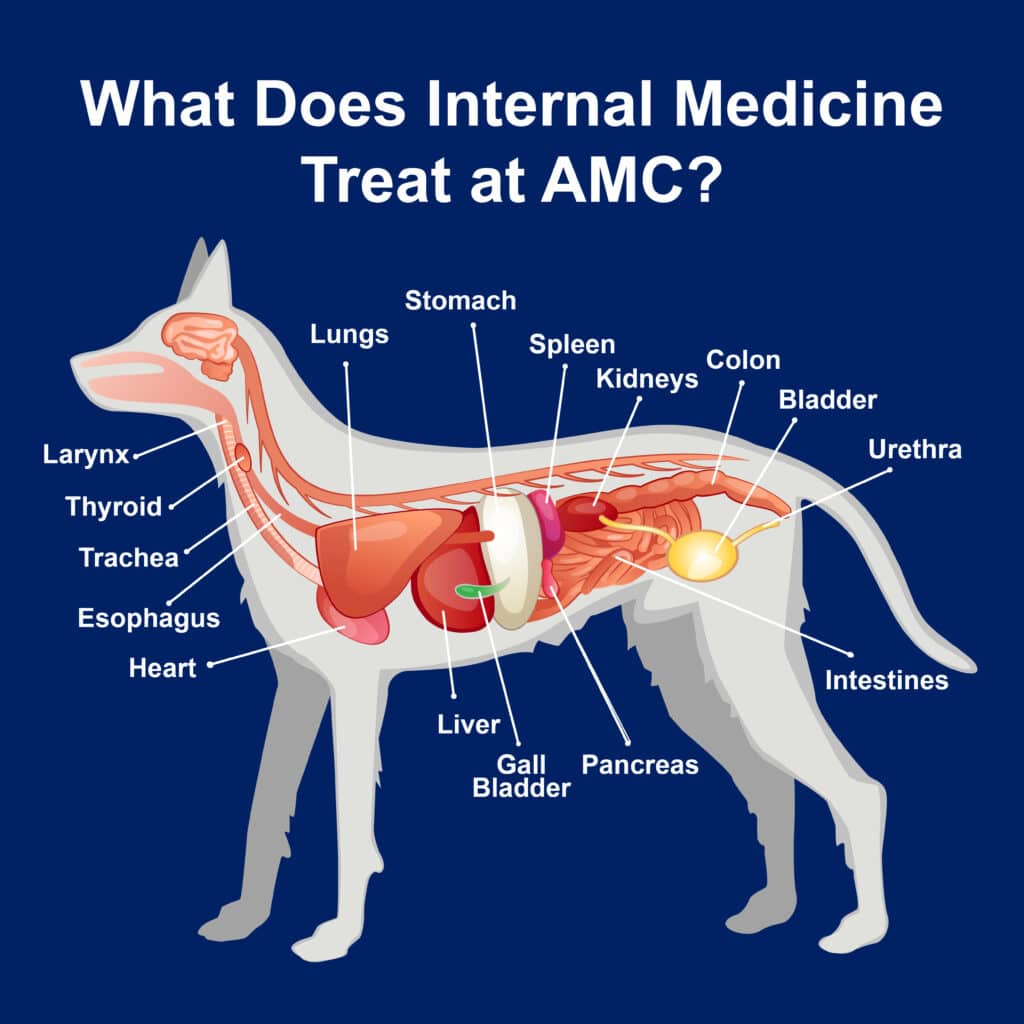
This post gives just a short introduction to the capabilities of veterinary internal medicine specialists. Their training allows them to manage an extraordinarily wide range of diseases — including, but certainly not limited to, pancreatic disorders. See the graphic below to get an idea of how veterinary internal medicine specialists treat the complete pet patient, from nose to tail.