
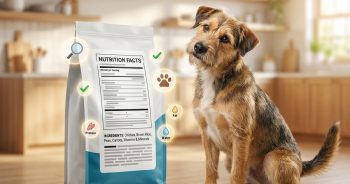
You know about the Food and Drug Administration, right? It’s the federal government agency responsible for protecting and promoting public health through the supervision of food safety (among other things). The FDA rules don’t only apply to humans — the agency regulates dog food, too.
That’s good to know. But what does a dog food nutrition label actually mean? You probably have an understanding of what calories, carbs, sodium, sugar, and an ingredients list indicate for a human diet, but dog food labels don’t always work the same way.
This guide breaks down the most important parts of a dog food label, what they mean, and what you should look for before you buy.
Dog Food 101
Animal feed is not the wild, wild west. There are federal rules and regulations to ensure food safety. The FDA sets standards for all animal feed, including proper identification of the product, the manufacturer’s name and address, and a listing of ingredients. Some states also have additional labeling regulations.
Many states require animal food manufacturers to follow the AAFCO (Association of American Feed Control Officials) guidelines. This organization established standards for nutritionally balanced animal foods.
If you see a label that says the food is “complete and balanced,” it generally means the food contains the minimum amount of nutrients necessary for dogs for the life stage listed on the packaging.
How Do You Read a Dog Food Label?
If you review the label on your dog’s food, you’re not alone. A Pet Food Packaging Survey from label maker Luminer found a staggering 92% of people with dogs read the ingredients list when buying new animal food.
Before we get to the label itself, let’s talk about what your dog actually needs. According to Tufts University Veterinary Medical Center, “[Animals] require nutrients, not ingredients; a diet full of great sounding ingredients can be less nutritious than a diet containing less appealing (to people) ingredients.”
Now for the actual label.
The Ingredient List: What’s Really in the Food?
One of the first things you’ll see on the food label is an ingredient list. Just like on human food labels, the ingredients on animal food must be listed by weight.
If your dog is eating a meat-based food, the meat will likely be listed first. However, keep in mind that fresh meat contains a lot of water. According to the FDA, meat can be about 75% water, which means it may drop lower on the list after processing.
Protein is important to a dog’s diet, so it’s a good sign if you see recognizable protein sources near the top of the ingredient list (like chicken, turkey, beef, salmon, or lamb).
What About “Meal” or “By-Products”?
These words scare a lot of people, but they aren’t automatically bad.
Meat meals (like chicken meal) are often more concentrated sources of protein because much of the water has already been removed.
By-products can vary widely in quality depending on the manufacturer. Some can be nutritious, but it’s worth choosing brands you trust and can contact easily.
Watch for “Flavoring” Ingredients
Take a look at the “flavoring” ingredients. If the food has high-quality protein, it shouldn’t need things like “chicken flavor” or “beef flavor” to make the food appealing.
Sometimes flavoring is used to make a grain-heavy formula taste more enticing. This is another reason to look for a food that includes a strong protein source high on the ingredients list.
Guaranteed Analysis: The Numbers on the Bag
Another important piece of information is the Guaranteed Analysis. This required label section lists the product’s nutrient content and identifies the labeled percentages of:
Crude protein (minimum)
Crude fat (minimum)
Crude fiber (maximum)
Moisture (maximum)
It’s important to understand that these numbers are minimums and maximums, not exact amounts.
Also, the word “crude” doesn’t mean low quality — it’s simply a scientific term that refers to the method used to measure the nutrient content.
Why Wet Food and Dry Food Look Different
Wet food usually has much higher moisture, so the protein percentage may look lower on the label compared to kibble. If you’re trying to compare wet and dry foods accurately, veterinarians often use something called a dry matter basis, which removes moisture from the equation.
You don’t have to do complicated math, but it’s good to know that label percentages can be misleading when comparing different types of food.
The AAFCO Statement: One of the Most Important Lines on the Label
If there’s one part of the label dog owners should learn to recognize, it’s the AAFCO nutritional adequacy statement.
This statement tells you whether the food is nutritionally complete and balanced, and which dogs it’s meant for (like puppies, adults, seniors, or “all life stages”).
Look for language similar to:
“Animal feeding tests using AAFCO procedures substantiate that…”
“Formulated to meet the nutritional levels established by AAFCO…”
Watch Out for This Phrase
If the label states “for intermittent or supplemental feeding only,” the food is not intended as a complete diet on its own.
Calorie Content: How Much Energy Is in the Food?
Dog food labels often include a calorie statement, but it may not always be easy to interpret. You may see calories listed as:
kcal/kg (calories per kilogram)
kcal/cup (common for kibble)
kcal/can (common for wet food)
Keep in mind that “per cup” can vary depending on kibble size and density, and measuring cups aren’t always consistent.
Most adult house dogs that have been spayed or neutered have relatively low energy requirements. In general, many dogs do well on foods that are not overly calorie-dense — but your dog’s ideal calories depend on their size, activity level, and metabolism.
Feeding Guidelines: Don’t Skip This Part
Read the daily feeding recommendations. Forty percent of Luminer’s survey respondents said they don’t follow the package’s directions.
While feeding charts aren’t perfect for every dog, they’re a helpful starting point. Following the guidelines can help ensure you aren’t overfeeding or underfeeding your pup.
If your dog is gaining weight, losing weight, or constantly acting hungry, it’s okay to adjust portions. A great way to tell if your dog is getting the right amount is by using a body condition score chart and checking with your vet if you’re unsure.
“Natural,” “Organic,” “Human Grade”… What Do These Words Mean?
Natural, organic, human grade, holistic… All of these characterizations can be confusing. Here’s a quick guide to what they mean and the impact on your pup’s food.
Natural
This word seems innocuous, but it has some meaning behind it. If a food label says it is “natural,” the ingredients generally have not had chemical alterations, according to FDA guidelines.
Organic
Food labeled organic must adhere to the same standards as organic human food. This type of food, according to the USDA, is grown with fewer pesticides than non-organic food.
Holistic
Watch out for the “holistic” label because it has no official meaning. The FDA does not regulate the use of this word. There are no legal requirements. Consider “holistic” a marketing term.
Human Grade
This is another term that can be misleading. In many cases, it’s used as marketing language and doesn’t always have a strict legal definition on pet food labels. Also, when a product is designated as animal food, it is no longer intended for human consumption.
Lesson: don’t eat dog food.
Grain-Free
Grain-free dog food isn’t automatically healthier. Some dogs do better with grains, and grains can provide useful nutrients. Unless your dog has a specific sensitivity or your vet recommends avoiding grains, grain-free isn’t always necessary.
Limited Ingredient
Limited ingredient diets can be helpful for dogs with sensitivities, but “limited ingredient” doesn’t always mean “hypoallergenic.” If you suspect a true food allergy, your vet may recommend a specific elimination diet trial to identify the trigger.
What Food Is Best for Your Dog?
Dogs do best with balanced nutrition, and they need more than just meat to live a healthy life. There are six basic nutrients your pup needs:
Water: The most essential nutrient of all. It supports digestion, circulation, temperature control, and overall organ function.
Proteins: Helps build and maintain muscles, skin, and tissue, and provides important amino acids your dog needs to stay strong and healthy.
Fats: A major energy source that supports brain health, healthy skin and coat, and helps the body absorb certain vitamins.
Carbohydrates: Provides energy and fiber, which can support healthy digestion and keep your dog feeling full between meals.
Minerals: Supports strong bones and teeth, nerve function, and important processes like hydration balance and muscle movement.
Vitamins: Helps support immunity, metabolism, and overall body function — and keeps your dog’s systems working the way they should.
Every dog’s dietary requirements are different, so the best approach to picking food is to always check with your vet, especially if your dog has health issues like allergies, pancreatitis, kidney disease, or chronic digestive trouble.
However, we can offer some general guidelines:
Select items with real, recognizable ingredients. If you don’t recognize most of the listed ingredients, it may not be the best choice for your pup.
Avoid corn and wheat gluten if your dog has sensitivities or does poorly on those ingredients.
Look for foods without chemical preservatives such as Butylated Hydroxyanisole (BHA), Butylated Hydroxytoluene (BHT), and Ethoxyquin.
Try to avoid food dyes such as Blue 2, Red 40, and Yellow 5 and 6.
Choose a diet that fits your dog’s calorie needs. Many adult house dogs do well on lower-calorie foods, but portion size matters just as much as the calorie number on the label.
Consider your dog’s life stage. Puppy food is quite different than adult dog food. Puppies need higher levels of protein, fat, calcium, phosphorus, sodium, and chloride to support their growth and development.
There is also a difference between adult and senior dog food. Dr. Jennifer Coates writes that many veterinarians recommend that:
Small dogs switch at around 8 years
Medium-sized dogs at around 7 years
Large breeds at around 6 years
Giant breeds at around 5 years
Senior dog food may contain less fat to reduce the chances of obesity. It may also have higher levels of antioxidants or moderate levels of protein aimed at maintaining muscle mass while not straining the kidneys.
What About Differences in Size?
There’s no perfect one-size-fits-all answer for how much your dog should eat. One good guideline is the food’s feeding chart, but your dog’s body condition is the best long-term indicator.
If you’re unsure, a body condition scale can help you evaluate whether your dog is too thin, too heavy, or right where they should be.
Buy Food You Trust
Review the label before you buy food for your pet. No matter if it’s treats or kibble, it’s worth pausing to learn what you’re feeding your dog.
Also, look for brands that make it easy to find:
The manufacturer’s contact information
A website and phone number
Lot numbers and best-by dates
These details matter if you ever need to report a concern or check for recalls.
Remember, some terms are marketing gimmicks and don’t always reflect real differences in food quality. Does your dog have specific dietary needs? Consider some of the options below.
Best Novel Protein Dog Foods
Best Non-GMO Dog Foods
Best Limited Ingredient Dog Foods
Dog Foods without Corn, Wheat & Soy
And if you’re looking for snacks you can trust, we’ve got you covered. Check out these healthy treats that make your pup happy and feed a dog in need.
The post Dog Food Nutrition Labels 101: What You Need to Know appeared first on iHeartDogs.com.