
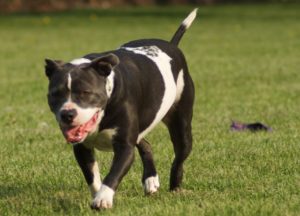
We all love our Pit Bulls and want to give them the best lives possible. However, sometimes the way we express our love can have negative side effects. For example, too many treats and too much snuggling on the couch can create an overweight Pittie with health problems. Pitties can get fat pretty easily, so it’s important to watch your dog’s weight. The following are 3 signs your Pittie is overweight. If you notice any of these, you should talk to your vet to rule out any medical causes and then get them on a diet and exercise program.
How Much Should Pit Bull Weigh?
55 to 60 Lbs
A photo posted by @sullysunshine on Jan 14, 2016 at 5:36pm PST
#1 – Can’t Feel Ribs
You should be able to feel your Pittie’s ribs easily when you run your hand over their middle. Some super sporty Pit Bulls have ribs that are slightly visible, but there should be some meat on those bones. The main thing is balance – not too skinny, but not too thick. If you are unsure, ask your vet.
#2 – No Definition
Pit Bulls come in a variety of body shapes – some are taller with longer legs, others are more square with deeper chests. However, regardless of body type, your Pittie should have definition. This means that they have a bigger rib cage that tapers off to a defined waist. If your Pit Bull is one smooth line from chest to tail, she is packing extra pounds. Dr. Sophia Yin’s website has a great, easy to follow guide for checking your Pit’s body definition.
#3 – Panting
Unless your Pit Bull is stressed or too warm, panting is another sign he is overweight. If your Pittie starts to pant after only walking a block or so, he may be out of shape and overweight. Definitely time to start an exercise regimen to slowly build back his stamina and lose some pounds.
Frequently Ask Questions:
If you own a Pitbull, there may come a time when you start to wonder if your dog is too fat. A Pitbull might get fat because he is not fed right, does not get enough exercise, or has a disease. You might be able to get the Pitbull back to a healthy weight by changing what he eats, giving him more exercise, and taking care of any diseases that might be causing weight issues. First, learn what constitutes a healthy weight and then learn how to combat obesity.
What Should I Feed My Overweight Pitbull?
First, feed your pit bull the correct food for their species and ensure they exercise enough. Consider a high-quality commercial brand if you cannot cook for your dog. Too many carbohydrates and insufficient nutrients in cheap kibble cause dogs to lose weight. Free feeding your dog can quickly lead to obesity. If you feed your dog a lot as a training reward, you may need to reduce its mealtime portions.
How Much Should I Feed My 50 Lb Pitbull?
A fifty-pound pit bull should only get about 2 2/3 cups of food daily. Split this amount up between two or three meals, including treats. A more active pitbull can eat up to three cups of food per day.
How Much Should I Feed My 70-Pound Pitbull?
If your dog weighs seventy pounds, feed them between 2 2/3 to 3 1/3 food daily. Remember, this is the amount, including treats and table scraps. Sedentary dogs should eat on the lower end, while active dogs on the higher end. Make sure your dog gets plenty of water too.
How Do I Keep My Pitbull Lean?
The first thing you need to do to help your dog build muscle is to make sure it gets enough food. Whether your Pitbull looks too skinny or too fat, you should feed them food that helps them build muscle. After all, what you eat is a very important part of building muscle.
If you want your dog to be leaner or have more muscle, you should feed it foods that help build muscle. At least 40% of your dog’s food should be protein. This compound does more than just build muscle; it also makes the immune system stronger. Every meal should have boiled chicken, pork, beef, or fish, which are all high in protein.
Next, your dog should get about forty percent of daily food should come from carbs, which help brain and body cells grow. Carbohydrate-rich foods include brown rice, whole wheat, corn, and potatoes. Also, twenty percent of your dog’s meal plan should be fat. This is needed to give the muscles the fuel they need to work.
Exercise is also a very important part of building muscle. Start with easy exercises like walking and running. After you get used to this routine, you can try other things like pulling weights, pulling spring poles, or even running uphill. It’s important not to push your dog too far, or you might do more harm than good.
How Much Should I Feed My 60 Lb Pitbull?
Feed your dog a mix of wet food and kibble for optimum health. A sixty-pound dog needs about 2-2/3 to 3-1/3 cups of food per day. More active dogs may need more, especially if they are working on high-intensity exercise or weight training.
What Meat Is Best For Pitbulls?
Meat equals protein and amino acids that dogs need to thrive. Beef offers the most affordable option and offers protein, iron, selenium, zinc, and the B vitamins B3, B6, and B12. Beef’s only drawback is that it can be very fatty. However, dogs can also benefit from the omega-fatty acids in fish.
Chicken provides excellent lean nutrition, as does lamb and pork. However, do not overlook organ meat, either. Organ meat contains natural nutrients that can help you gain a healthy weight and build muscle. Also, buy organ meat from animals like beef or lamb that your dog loves to eat. This keeps your pet from getting stomach problems or diarrhea.
How Much Should I Feed My Dog To Lose Weight?
The amount of food to feed your pitbull depends on their age, weight if they need to lose weight, health, conditions, and gender. On average, Pitbulls will need 2-2/3 to 4-1/4 cups daily. Start by reducing their diet by one-third cup and increasing exercise. Before restricting calories more, talk to your pet’s veterinarian.
Is High Protein Dog Food Good For Pitbulls?
During growth, Pitbulls need at least 22% protein in their food, while adult dogs only need 18% protein. When thinking about the best diet for a pitbull, choose foods with high-quality animal-based protein sources like beef, chicken, lamb, pork, eggs, and fish, as well as plant-based protein sources like grains, legumes, and vegetables.
Can I Feed My Pit Bull 3 Times A Day?
Most experts say you should feed your dog twice a day, once in the morning and once at night. However, puppies under five months old should be fed three to four times a day or as your vet recommends.
Do Pitbulls Need More Food?
Do not give your pit bull more food because they worked out more one day. A healthy and happy pitbull needs to eat a balanced diet that does not change depending on how much it works out. Your vet can tell you how much food your dog should eat, so take that amount and give it to your dog in two or three meals throughout the day.
Can Pitbulls Be Overweight?
It’s important to keep an eye on your pitbull’s weight to ensure she stays healthy. A lot of bad things can happen because of being overweight. Also, keep in mind that Pitbulls vary more than most other dog breeds when it comes to their ideal height and weight. Some Pitbulls might weigh 80 or 90 pounds. Some may only get to a healthy adult weight of about 45 pounds which is normal for them.
At two months, your pit bull should weigh between 15 and 20 pounds to be healthy. The average weight for a 4-month-old is between 35 and 40 pounds. A pit bull usually weighs between 40 and 60 pounds at six months old. At one year old, that weight goes up to 50 and 75 pounds.
What Is Obese For A Pitbull?
Yes, Pitbulls can get overweight, just like all other animals. A male Pitbull should weigh between 35 and 60 pounds. Also, a female Pitbull should weigh between 35 and 50 pounds, according to them. It may be normal for a dog to go a little bit over the healthy range, but if a dog’s weight is much higher than what is healthy, you know you have an overweight pit bull.
Can Pitbulls Be Over 100 Pounds?
There are numerous different varieties of pit bulls. A pitbull does not refer to a specific breed of dog but rather to a group that includes many different canine ancestries. That indicates there is a range of sizes for pit bulls. The American Staffordshire Terrier, the Staffordshire Bull Terrier, and the Cane Corso mixes are examples of breeds that weigh between 30 and 40 pounds range, whereas mixtures of mastiffs can easily tip the scales at well over 100 pounds. Although, for the most part, the typical pitbull weighs somewhere between 55 and 60 pounds.
Is 80 Pounds Overweight For A Pitbull?
Depending on the breed of pitbull, eighty pounds could be just right or sorely overweight. Most Pitbulls are between 55 and 60 pounds, but up to a hundred pounds can be normal for other breeds. Check with your vet to see if your dog is the right weight for their specific factors.
Overweight Breed Informational Pages
Is My Bulldog Overweight Or Obese?
Is My Chihuahua Overweight Or Obese?
Is My Corgi Overweight Or Obese?
Is My Dachshund Overweight Or Obese?
Is My Doberman Overweight Or Obese?
Is My German Shepherd Overweight Or Obese?
Is My King Charles Spaniel Overweight Or Obese?
Is My Lab Overweight Or Obese?
Is My Maltese Overweight Or Obese?
Is My Pit Bull Overweight Or Obese?
Is My Pomeranian Overweight Or Obese?
Is My Rottweiler Overweight Or Obese?
Is My Shih Tzu Overweight Or Obese?
Best Joint Supplement for Dogs
Best CBD Gummies for Dogs
Goat’s Milk for Dogs
Skin & Coat Supplements for Dogs
Weight Gain Supplements for Dogs
Muscle Building Supplements for Dogs
Heart Supplements for Dogs
Multivitamins for Dogs
Pill Pockets for Dogs
Digestive Enzymes for Dogs
Turmeric for Dogs
Liver Supplements for Dogs
Tear Stain Supplement for Dogs
Breath Fresheners for Dogs
Kidney, Urinary, & Bladder Supplements for Dogs
Stool Eating Deterrent for Dogs
Eye Supplements for Dogs
Melatonin for Dogs
Apple Cider Vinegar for Dogs
Green Lipped Mussels for Dogs
L Theanine for Dogs
Chondroitin Supplements for Dogs
MSM for Dogs
Valerian Root for Dogs
Chamomile for Dogs
Boswellia for Dogs
L Tryptophan for Dogs
Yucca for Dogs
Licorice Root for Dogs
Bromelain for Dogs
Papain for Dogs
Devil’s Claw for Dogs
Quercetin for Dogs
Hemp gummy for dogs
Best Hemp Dog Treats
Best Hemp Oil for Dogs
Best Calming Treats, Chews, & Supplements for Dogs
Best Bone Broth for Dogs
Best Fish Oil for Dogs
Best Probiotics for Dogs
Best Hip Dysplasia Supplements for Dogs
Best Colostrum for Dogs
Best Quercetin for Dogs
Best Greens for Dogs Supplements
Best Vitamin C Supplements for Dogs
Best Probiotic for Dog with Allergies
Best Taurine Supplements for Dogs
Best Dog Food Toppers
Best Anal Gland Supplement for Dogs
Best Dog Probiotic Powder
Best CoQ10 Supplement for Dogs
Best Liquid Glucosamine for Dogs
Best Wrinkle Creams, Balms, and Wipes for Dogs
Best Puppy Calming Treats
Best Colloidal Silver for Dogs
Best Adaptogen Supplements for Dogs
Best Cognitive Supplements for Dogs
Best Bee Pollen for Dogs
Best Vitamin A Supplements for Dogs
Best Vitamin E Supplements for
Best Liquid Glucosamine Supplements for Dogs
Best SAM-e Supplements for Dogs
Best Hyaluronic Acid Supplements for Dogs
Best Apple Cider Vinegar Supplements for Dogs
Best Diarrhea Medicine for Dogs
Best Milk Thistle for Dogs
Best Turkey Tail Mushroom Supplements for Dogs
Best Astaxanthin Supplements for Dogs
Best Lutein Supplements for Dogs
Best Electrolyte Supplements for Dogs
Best Coconut Oil for Dogs
Best Prenatal Vitamins for Dogs
Best Puppy Milk Replacements
Best Iron Supplements for Dogs
Best Dewormer Products for Dogs
Best Mange Medications for Dogs
Best Cough Relief Products for Dogs
Best Sinus Relief Products for Dogs
Best Collapsed Trachea Supplements for Dogs
Best Fireworks Anxiety Relief Products for Dogs
Best Thunderstorm Anxiety Relief Products for Dogs
Best Travel Anxiety Relief Product for Dogs
Best Supplements for a Dog with a Torn ACL
Best Supplements for a Dog with Patellar Luxation
Best Supplements for a Dog with Intervertebral Disc Disease
Best Zinc Supplements for Dogs
Best Biotin Supplements for Dogs
Best Tart Cherry Supplements for Dogs
Best Resveratrol Supplements for Dogs
Best Ginkgo Biloba Supplements for Dogs
Best Ashwagandha Supplements for Dogs
Best Supplements for Dogs with Cushing’s Disease
Best Adrenal Supplements for Dogs
Best NAD+ Supplements for Dogs
Best NMN Supplements for Dogs
Best Supplements for Dogs with Dementia
Best Supplements for Dogs with CCD(Canine Cognitive Dysfunction)
Best Fiber Supplements for Dogs
Best Spirulina for Dogs
Best Hairball Remedies for Dogs
Best Eye Drops for Dogs with Allergies
Best Magnesium Supplements for Dogs
Best Brushes for Double-Coated Dogs
Best Dandelion Root Supplements for Dogs
Best Probiotic for Dogs with Yeast Infections
Best Flaxseed Oil for Dogs
Best Chamomile Supplements for Dogs
Best Lavender Supplements. Treats & Sprays for Dogs
Best Collagen Supplements for Dogs
Best Kelp Supplements for Dogs
Best Activated Charcoal for Dogs
Best Slippery Elm Supplements for Dogs
Best Supplements for Dogs with Seizures & Epilepsy
Best Antioxidant Supplements for Dogs
Best Ubiquinol Supplements for Dogs
Best Hormone & Glandular Supplements for Dogs
Best Thyroid Supplements for Dogs
Best Iodine Supplements for Dogs
Best Dog Shedding Supplements for Dogs
Best Detox Supplements for Dogs
Best Postbiotics for Dogs
Best Aspirin Products for Dogs
Best Dog Anti-Nausea Products
Best Dog Mouthwashes
Best Camelina Oils for Dogs
Best Hemp Seed Oils for Dogs
Best Natural Anti-Inflammatories for Dogs
Best Cancer Supplements for Dogs
Best Sardine & Anchovy Oils for Dogs
Best Fatty Acid Supplements for Dogs
Best Chia Seed Supplements & Treats for Dogs
Best Olive Oils for Dogs
Best Amino Acid Supplements for Dogs
Best Moringa Supplements for Dogs
Best Echinacea Supplements for Dogs
Best Cranberry Supplements for Dogs
Best D-Mannose Supplements for Dogs
Best Nettle Leaf Supplements for Dogs
Best Marshmallow Root Supplements for Dogs
Best Astragalus Supplements for Dogs
Best Pumpkin Seed Supplement for Dogs
Best Supplements for a Dog Wetting The Bed
Best Blueberry Supplement for Dogs
Best Bromelain Supplements for Dogs
Best Yucca Supplements for Dogs
Best Ginger Supplements for Dogs
Best Rosehip Supplements for Dogs
Best Allergy Medicines for Dogs
Best Reishi Mushroom Supplement for Dogs
Best Maitake Mushroom Supplement for Dogs
Best Chaga Mushroom Supplement for Dogs
Best Shiitake Mushroom Supplement for Dogs
Best Cordyceps Mushroom Supplement for Dogs
Best Lion’s Maine Supplement for Dogs
Peptides for Dogs
BPC-157 for Dogs
The post Pit Bull Weight Management: Veterinary Health Assessment (2026) appeared first on iHeartDogs.com.