
Dog Breeds That Start With S (2026): 25 Breeds Worth Knowing
Looking for a dog breed starting with the letter S? You’ve come to the right place. The “S” group is one of the most varied in the entire dog world — you’ll find fluffy white Samoyeds that look like living stuffed animals, athletic Siberian Huskies built for frozen terrain, loyal German Shepherds trusted by militaries worldwide, and tiny Shih Tzus bred to sit on royal laps for centuries.
This guide covers 25 dog breeds that start with S, organized with real descriptions, temperament notes, and size info. No fluff, no filler — just the information you actually need to find your match.
S Breed Fast Facts
Most popular S breed in the US: German Shepherd (top 3 AKC breeds consistently)
Largest S breed: Saint Bernard (up to 180 lbs)
Smallest S breed: Schipperke (10–16 lbs)
Best S breed for families: Samoyed, Standard Poodle, and Soft Coated Wheaten Terrier
Best S breed for apartments: Shih Tzu, Scottish Terrier, and Schipperke
Highest energy S breed: Siberian Husky and Saluki
AKC-recognized S breeds: Over 25 officially recognized breeds
The Complete List of Dog Breeds That Start With S
1. German Shepherd (Schäferhund)
The German Shepherd is arguably the most well-known working dog on the planet. Bred in Germany in the late 1800s to herd and protect flocks, they’ve since found their way into police units, military forces, search and rescue teams, and living rooms across the world.
Size: Large (50–90 lbs)
Temperament: Loyal, confident, courageous
German Shepherds bond deeply with their families and are naturally protective. They’re also one of the most trainable breeds you’ll ever work with. That trainability comes with a catch: they need mental stimulation every single day. A bored German Shepherd will redecorate your house — not in a good way. If you want a dog that will push you to be a better owner, this is it.
2. Samoyed
The Samoyed is one of the most striking dogs in existence. That thick, all-white double coat evolved for survival in Siberia, where temperatures drop well below freezing. What looks like a fancy show dog is actually a tough, ancient working breed.
Size: Medium to large (35–65 lbs)
Temperament: Friendly, gentle, adaptable
Samoyeds are notoriously friendly — they’re not great guard dogs because they love strangers too much. The perpetual smile on their face isn’t just for show; they’re genuinely happy dogs with a great temperament for families and children. The downside? That coat sheds massively twice a year. Keep a good vacuum and a lint roller nearby at all times.
3. Siberian Husky
Siberian Huskies were built for one thing: running. Long distances, in the cold, pulling sleds. The Chukchi people of northeastern Siberia developed them over thousands of years for exactly this purpose. That heritage shows in everything they do.
Size: Medium (35–60 lbs)
Temperament: Outgoing, mischievous, athletic
Huskies are escape artists with a flair for drama. They howl, they dig, and they’ll run for miles if you give them the chance. They’re also incredibly friendly and pack-oriented. If you have an active lifestyle and a secure yard, a Husky can be a fantastic companion. If you want a dog that lounges on the couch and ignores squirrels, look elsewhere.
4. Shih Tzu
The Shih Tzu has been around for over a thousand years, bred to be a companion dog for Chinese royalty. That history shows in their personality — they’re confident, a little stubborn, and absolutely certain that they deserve the best treatment you can offer.
Size: Toy (9–16 lbs)
Temperament: Outgoing, affectionate, alert
Shih Tzus are remarkably adaptable. They do well in apartments, tolerate different temperatures, and get along with kids and other pets. They don’t need much exercise — a short daily walk keeps them happy. The main time investment is grooming. That long coat requires regular brushing or professional trimming. If you get a puppy cut, maintenance drops significantly. Check out our guide to dog breeds that start with B for more small and toy breeds worth considering.
5. Standard Poodle
Standard Poodles are often underestimated because of their fancy show clips. The reality? They’re one of the smartest, most athletic breeds in existence. Originally bred in Germany as water retrievers, they’ve been used for hunting, circus performance, military work, and therapy.
Size: Large (40–70 lbs)
Temperament: Intelligent, active, proud
Standard Poodles are an excellent choice if you want a large dog that doesn’t shed much. They’re hypoallergenic by most standards and genuinely low-maintenance on the shedding front. They do need regular grooming appointments, but the coat stays off your furniture and clothes. Training-wise, they pick things up faster than almost any other breed.
6. Saint Bernard
Saint Bernards are gentle giants in the truest sense. Developed by Swiss monks at the Saint Bernard Hospice to rescue travelers lost in Alpine passes, they have a legendary history of saving lives in impossible conditions. Today they’re mostly devoted couch companions — with the emphasis on “massive.”
Size: Extra large (120–180 lbs)
Temperament: Gentle, patient, friendly
Saint Bernards are wonderful with children and have a naturally calm disposition. They drool. A lot. If that’s a dealbreaker, consider this your warning. They’re also not built for heat — these dogs do much better in cooler climates. Feeding a Saint Bernard is also a significant monthly expense, so budget accordingly before you fall in love with a puppy.
7. Scottish Terrier
The Scottish Terrier — affectionately called the “Scottie” — is a feisty, independent little dog with a big personality. Despite their small size, they carry themselves with confidence that borders on arrogance. Presidents have loved them: FDR’s Scottie Fala became one of the most famous dogs in American history.
Size: Small (18–22 lbs)
Temperament: Independent, alert, confident
Scotties are not typical lap dogs. They were bred to hunt vermin in rough Scottish terrain, and that terrier instinct runs strong. They’re loyal to their families but can be reserved with strangers. They don’t need much exercise — two short walks a day usually does it — making them a good option for apartment dwellers who want a dog with personality.
8. Shetland Sheepdog (Sheltie)
The Shetland Sheepdog, or Sheltie, looks like a miniature Rough Collie. That’s no accident — they share ancestry and were developed on the remote Shetland Islands off Scotland to herd smaller flocks on rugged terrain. They’re incredibly intelligent and eager to please.
Size: Small to medium (15–25 lbs)
Temperament: Intelligent, loyal, gentle
Shelties excel at obedience and agility competitions. They learn quickly and love having a job. The flip side: they’re sensitive and don’t respond well to harsh corrections. Positive reinforcement works wonders. They’re also vocal — barking is their default reaction to anything new. Early training to manage barking is a must if you have close neighbors.
9. Springer Spaniel (English Springer Spaniel)
The English Springer Spaniel is one of the most energetic sporting dogs you’ll find. They were bred to flush game birds from cover and retrieve them after the shot. That drive translates into a high-energy, enthusiastic companion that needs serious daily exercise.
Size: Medium (40–50 lbs)
Temperament: Friendly, playful, obedient
Springers are great family dogs — they’re affectionate, good with kids, and genuinely happy animals. They love water and will leap into any puddle, pond, or pool they find. Keep a towel by the door. If you’re an active family that hikes, runs, or plays outdoors regularly, a Springer will fit right in.
10. Saluki
The Saluki is one of the oldest dog breeds ever recorded, with images appearing in ancient Egyptian tombs going back over 4,000 years. They were bred by nomadic tribes across the Middle East to chase gazelle across desert terrain — and their speed reflects that. Salukis are among the fastest dogs alive, capable of reaching 40+ mph.
Size: Medium to large (35–65 lbs)
Temperament: Gentle, reserved, independent
Salukis are elegant, quiet, and deeply attached to their people. They’re cat-like in their independence but surprisingly affectionate once they trust you. A secure yard is non-negotiable — these dogs will chase anything that moves and outrun you in seconds. They’re not great for first-time dog owners but are a joy for patient, experienced handlers.
11. Schnauzer (Standard Schnauzer)
The Standard Schnauzer is the original of three Schnauzer sizes (miniature, standard, giant), and it’s a brilliant all-purpose working dog. Originally from Germany, they were used for ratting, herding, and guarding. They’re square-built, bearded, and bold in personality.
Size: Medium (30–50 lbs)
Temperament: Alert, spirited, obedient
Standard Schnauzers are intelligent and trainable, but they have an independent streak that makes them different from people-pleasing retrievers. They need a confident handler and consistent training from an early age. They’re low-shedding, which is a big plus. Our guide to breeds similar to Schnauzers is a great read if you like this type but want to compare options.
12. Spinone Italiano
The Spinone Italiano is an ancient Italian pointing breed with a shaggy, wiry coat and a genuinely warm personality. These dogs are rugged hunters in the field and total marshmallows at home. They’re patient, sociable, and incredibly gentle with children.
Size: Large (60–85 lbs)
Temperament: Sociable, docile, patient
Spinoni are one of the better-kept secrets in the sporting dog world. They don’t have the intensity of a Pointer or the speed of a Vizsla, but they’re versatile, low-key, and adaptable to family life. They do slobber a bit, and that wiry beard traps a lot of water. Prepare for some mess after drinks.
13. Sloughi
The Sloughi is a North African sighthound, closely related to the Saluki, bred by Berber tribes to hunt across desert and semi-desert terrain. They’re lean, fast, and deeply connected to their family but extremely reserved with strangers.
Size: Medium to large (35–50 lbs)
Temperament: Gentle, reserved, sensitive
Sloughis are quiet, sensitive dogs that bond closely with one person. They need a soft touch — these are not dogs that respond well to raised voices or heavy-handed training. They’re rare in the US but a good match for experienced owners who appreciate sighthound temperament.
14. Smooth Fox Terrier
Smooth Fox Terriers are compact, energetic hunting dogs developed in England in the 18th century to chase foxes out of their dens. They’re lively, alert, and always ready to go. If you want a smaller dog with big-dog attitude, this is a solid choice.
Size: Small (15–18 lbs)
Temperament: Alert, quick, friendly
Smooth Fox Terriers need mental and physical activity every day. They’re smart enough to get bored quickly, and a bored Smooth Fox Terrier will dig up your garden. They’re not great with cats or small animals — that prey drive is hard to train out. But for an active owner who wants a small, confident companion, they’re hard to beat.
15. Schipperke
The Schipperke is a small Belgian dog with a fox-like face and a personality ten times its size. Originally bred to guard barges along Belgian canals and hunt rats, they’re curious, confident, and surprisingly agile. They look like tiny black wolves.
Size: Small (10–16 lbs)
Temperament: Curious, energetic, devoted
Schipperkes are sharp little dogs that pick things up quickly. They don’t shed excessively, which is a bonus for small breed owners. They do need regular exercise and mental stimulation — their energy level is higher than their size suggests. Great for apartment dwellers who are active.
16. Soft Coated Wheaten Terrier
The Soft Coated Wheaten Terrier is an Irish farm dog with a silky, wavy coat and a joyful personality. They were bred to herd, hunt, and guard — which means they’re athletic, smart, and a little stubborn. But they’re also genuinely warm with people and great with kids.
Size: Medium (30–45 lbs)
Temperament: Happy, steady, self-confident
Wheatens have what owners call the “Wheaten greeting” — an enthusiastic jump-and-lick hello that they give to absolutely everyone. Training them out of jumping early saves your guests from soggy hugs. They’re low-shedding and relatively low-dander, which makes them a frequent recommendation for allergy-prone households.
17. Scottish Deerhound
The Scottish Deerhound is a large sighthound bred to chase and take down red deer in the Scottish Highlands. They look like shaggy Greyhounds, and like all sighthounds, they have a quiet, dignified temperament at home and explosive speed when something catches their eye.
Size: Large (75–110 lbs)
Temperament: Gentle, polite, responsive
Deerhounds are calm indoors, which surprises people given their size. They’re one of the taller breeds in the world, with some males reaching 32 inches at the shoulder. They don’t need constant activity but do need room to stretch out and a secure area to run. They’re not common in the US, which makes them a breed worth researching if you want something distinctive.
18. Sussex Spaniel
The Sussex Spaniel is one of the rarest spaniel breeds, with a low-slung body, golden-liver coat, and a slower, methodical hunting style. They were developed in Sussex, England to work in thick undergrowth. They’re calm and friendly at home, quite different in temperament from the more energetic Springer.
Size: Medium (35–45 lbs)
Temperament: Mellow, friendly, devoted
Sussex Spaniels are one of the few breeds that vocalize while tracking — a unique “howl-bark” that helped hunters follow them through dense brush. It’s a distinctive trait that some owners find charming and others find exhausting. If you want a low-key spaniel that doesn’t need marathon exercise sessions, the Sussex is worth a look. If you’re comparing spaniel types, check out our coverage of dog breeds that start with P, which includes several sporting breeds worth comparing.
19. Stabyhoun
The Stabyhoun is a Dutch sporting dog that’s barely known outside the Netherlands, where it’s considered a national treasure. These medium-sized dogs are versatile hunters, loyal family companions, and surprisingly easy to train. Their population worldwide is very small — fewer than 10,000 exist globally.
Size: Medium (40–55 lbs)
Temperament: Gentle, patient, obedient
Stabyhouns are calm, patient, and good with kids. They don’t have the intensity of many sporting breeds, which makes them an easier fit for family life. Finding a breeder takes serious research, but enthusiasts say the wait is worth it.
20. Swedish Vallhund
The Swedish Vallhund looks like a Corgi crossed with a wolf — and that’s basically what it is. These small, low-slung herding dogs were used by Vikings to herd cattle over a thousand years ago. They’re energetic, intelligent, and deeply attached to their people.
Size: Small to medium (20–35 lbs)
Temperament: Energetic, alert, sociable
Swedish Vallhunds are playful and adaptable. They can live in apartments if they get enough exercise, but they were built to work and need daily activity. Like most herding breeds, they’re happiest when they have a purpose — whether that’s agility training, trick work, or just a good long walk. They’re a fun, underrated breed that doesn’t get the attention it deserves.
21. Spanish Water Dog
The Spanish Water Dog is a rustic, curly-coated working dog from Spain used for herding, hunting waterfowl, and assisting fishermen. They’re athletic, intelligent, and have a strong work ethic. That curly coat doesn’t require brushing — it’s kept short or allowed to cord naturally.
Size: Medium (30–50 lbs)
Temperament: Athletic, loyal, versatile
Spanish Water Dogs bond deeply with their family but can be reserved or cautious with strangers. Early socialization is critical. They’re great candidates for dog sports and do well in active families. Low shedding is another plus.
22. Silky Terrier
The Silky Terrier is an Australian breed that looks like a larger Yorkshire Terrier with a silkier, longer coat. They’re small but terrier through-and-through — bold, feisty, and curious about everything. Don’t let that delicate appearance fool you.
Size: Toy (8–11 lbs)
Temperament: Alert, friendly, confident
Silky Terriers were actually bred to hunt snakes and small mammals in Australia. That prey drive is still there, so cats and small pets may not be safe housemates. They’re not as high-strung as some toy breeds and adapt reasonably well to apartment living. That silky coat needs regular brushing to stay tangle-free.
23. Skye Terrier
The Skye Terrier is one of the oldest terrier breeds, developed on the Isle of Skye in Scotland to hunt fox and otter in rocky terrain. Their most famous member: Greyfriars Bobby, the Skye Terrier who guarded his owner’s grave for 14 years in Edinburgh and became a legend of loyalty.
Size: Small to medium (25–40 lbs)
Temperament: Loyal, reserved, courageous
Skye Terriers are intensely loyal to their person but cautious with strangers. They’re not the easiest to train since they have strong opinions about everything. They’re also quite rare — you’ll need to find a specialty breeder. But for someone who appreciates a dog with deep history and fierce loyalty, the Skye Terrier delivers.
24. Sealyham Terrier
The Sealyham Terrier is a rare Welsh breed developed in the late 1800s by Captain John Edwardes to hunt badgers, otters, and foxes in the rough terrain around his estate. They’re sturdy, low-slung, and have a white, wiry coat with a great beard and eyebrows. They’ve been a favorite of Hollywood celebrities for decades.
Size: Small (23–24 lbs)
Temperament: Calm, outgoing, alert
Unlike many terriers, Sealyhams have a notably calmer temperament. They’re still terriers — still stubborn, still independent — but they have a lower-key energy level that makes them manageable for less active owners. They’re on the list of dogs that can be stubborn to train, which is worth reading if you’re considering a terrier for the first time.
25. Segugio Italiano
The Segugio Italiano is one of Italy’s oldest hunting breeds, used for centuries to track hare and wild boar across the Italian countryside. They’re hardy, athletic, and can work all day on minimal food. Two coat varieties exist: rough (wirehaired) and smooth (shorthaired).
Size: Medium (40–62 lbs)
Temperament: Calm, gentle, tenacious
Segugio Italianos are sweet-natured dogs that are good with children and generally easy to live with, as long as they get enough exercise. They’re virtually unknown outside Italy and parts of Europe, so finding one in the US takes some effort. If you love rare breeds and want a scent hound that’s calmer than a Beagle, this one’s worth researching.
S Breed Size Guide
Size
Weight Range
S Breeds
Toy / Small
Under 20 lbs
Shih Tzu, Schipperke, Silky Terrier, Scottish Terrier
Small-Medium
20–40 lbs
Shetland Sheepdog, Soft Coated Wheaten Terrier, Swedish Vallhund, Skye Terrier
Medium
40–65 lbs
Samoyed, Siberian Husky, Springer Spaniel, Standard Schnauzer, Sussex Spaniel, Spanish Water Dog
Large
65–115 lbs
German Shepherd, Standard Poodle, Spinone Italiano, Scottish Deerhound, Saluki
Extra Large
115+ lbs
Saint Bernard
How to Choose the Right S Breed for Your Home
The letter S covers an enormous range of dogs. Before you fall in love with a photo online, answer a few honest questions:
How active are you? Siberian Huskies, German Shepherds, and English Springer Spaniels need serious daily exercise. If you’re running 30 minutes a day and calling it done, look at a Shih Tzu, Sealyham Terrier, or Sussex Spaniel instead. Matching energy levels is the single most important factor in a successful dog-owner relationship.
What’s your experience level? Some S breeds are forgiving of mistakes. The Samoyed, Shetland Sheepdog, and Soft Coated Wheaten Terrier are good choices if you’re a relatively new dog owner. Salukis, Siberian Huskies, and Sloughis are better in experienced hands. They’re not difficult because they’re aggressive — they’re difficult because they’re independent and won’t respond well to typical training approaches.
Do you have kids or other pets? The Samoyed, Standard Poodle, Saint Bernard, and Soft Coated Wheaten Terrier are reliably good with children. Terriers like the Smooth Fox Terrier and Silky Terrier can be tricky around cats and small animals. Sighthounds like the Saluki and Scottish Deerhound have a prey drive that needs management.
What’s your space situation? Shih Tzus, Schipperkes, and Scotties do fine in apartments. Saint Bernards and Scottish Deerhounds need room to spread out. A Siberian Husky in a small apartment without daily serious exercise is a recipe for destruction.
Diet matters no matter which breed you choose. Our breakdown of Blue Buffalo vs Purina Pro Plan is a solid starting point for evaluating food options for any new dog. And if you’re browsing breed lists by letter, our complete guide to dog breeds that start with B covers 25 more breeds worth knowing about.
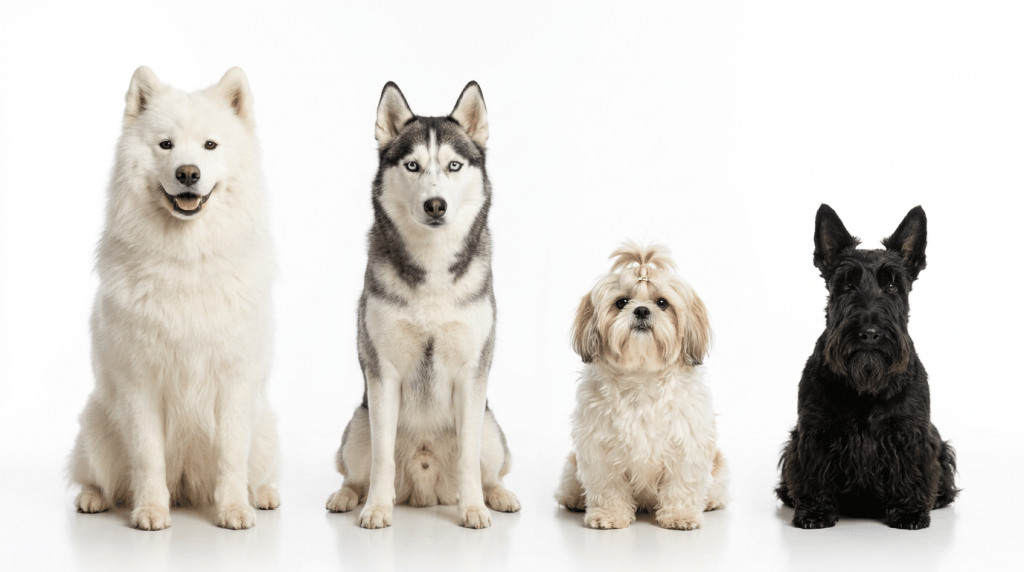
Some of the most popular dog breeds starting with S — Samoyed, Siberian Husky, Shih Tzu, and more.
Frequently Asked Questions About Dog Breeds That Start With S
What is the most popular dog breed that starts with S?
The German Shepherd is the most popular dog breed starting with S in the United States, consistently ranking in the top 3 AKC breeds. The Siberian Husky and Shih Tzu are also perennial favorites. The Samoyed has grown in popularity significantly over the past decade thanks to social media.
What S breed is best for first-time dog owners?
The Shih Tzu, Shetland Sheepdog, and Soft Coated Wheaten Terrier are generally the best S breeds for first-time owners. They’re adaptable, trainable, and good with families. Avoid Siberian Huskies, Salukis, and Sloughis if you’re new to dogs — these breeds need experienced handling and have strong independent instincts.
Are there any S dog breeds that don’t shed much?
Yes. The Standard Poodle, Soft Coated Wheaten Terrier, Spanish Water Dog, and Standard Schnauzer are all low-shedding breeds starting with S. Standard Poodles and Soft Coated Wheaten Terriers are frequently recommended for people with mild dog allergies, though no dog is truly hypoallergenic.
What is the biggest dog breed starting with S?
The Saint Bernard is the largest breed starting with S, typically weighing between 120 and 180 pounds, with some individuals reaching even more. They’re Swiss rescue dogs developed by monks at the Great Saint Bernard Pass, originally used to find and rescue travelers lost in Alpine snow.
Which S dog breed is best for active families?
The Siberian Husky, German Shepherd, and English Springer Spaniel are the best S breeds for active families. All three need substantial daily exercise and mental stimulation. The Samoyed and Shetland Sheepdog are also great options for families that are active but want something more manageable than a Husky.
What dog breed starting with S is good for apartments?
The Shih Tzu, Schipperke, and Scottish Terrier are the top S breeds for apartment living. They’re small, adaptable, and don’t need a yard. The Sealyham Terrier also works well in smaller spaces since they have a calmer energy level than most terriers.
How many dog breeds start with the letter S?
The AKC officially recognizes over 25 dog breeds starting with the letter S. When you include internationally recognized breeds and those with pending AKC recognition, the number climbs past 35. The “S” group is one of the largest and most diverse letter groups in the dog world.
What is the fastest dog breed starting with S?
The Saluki is one of the fastest dog breeds in the world, capable of reaching speeds over 40 mph. They were bred by Bedouin tribes to chase gazelle across open desert. The Siberian Husky is built more for endurance over long distances rather than outright speed, but the Saluki wins in a sprint.
The Samoyed and Shih Tzu are both S breeds — but they couldn’t be more different in size, energy, and original purpose.
Bottom Line: Which S Breed Is Right for You?
The letter S has something for every type of dog owner. You’ve got loyal, versatile working dogs like the German Shepherd, fluffy Arctic companions like the Samoyed, ancient desert racers like the Saluki, and low-key apartment dogs like the Shih Tzu. That range is genuinely impressive.
Here’s a quick summary to help you narrow it down:
Want a family dog? Go with a Samoyed, Standard Poodle, or Soft Coated Wheaten Terrier.
Live in an apartment? Shih Tzu, Schipperke, or Scottish Terrier.
Need a working or sport dog? German Shepherd, Siberian Husky, or English Springer Spaniel.
Want a calm, lower-maintenance dog? Sussex Spaniel, Sealyham Terrier, or Spinone Italiano.
Looking for a rare breed? Stabyhoun, Swedish Vallhund, Segugio Italiano, or Sloughi.
Whatever breed catches your attention, feed them well from day one. Good nutrition is the foundation of a long, healthy life. Check out our comparison of Purina Pro Plan vs Royal Canin for two of the most vet-recommended options. And if you’re building out your breed research, our guide to dog breeds that start with P is another great resource to bookmark.
Take your time. The right S breed is out there waiting for you.
The post Dog Breeds That Start With S (2026): 25 Breeds Worth Knowing appeared first on iHeartDogs.com.