
Shutterstock
The natural world is home to various creatures, but some are so rare that even experts have trouble believing they exist. Humans rarely see these animals, whether deep in the ocean, in the highest mountain ranges, or impenetrable forests. Many of them are so elusive that they have only been photographed a handful of times, and some were thought to be extinct before reappearing in the wild. Their strange features and behaviors make them seem more like something from a science fiction movie than a biology textbook.
Ili Pika
Shutterstock
The Ili pika is a small, rabbit-like mammal that is so rare it was missing for over 20 years before it was rediscovered in 2014. Found only in the high-altitude regions of China’s Tian Shan mountains, this tiny creature looks like a mix between a teddy bear and a rodent. It was first discovered in 1983, but scientists could not locate it again for decades because of its remote habitat and solitary nature. Less than 1,000 are thought to exist, making it one of the rarest mammals in the world. Conservationists fear climate change and habitat destruction could push this elusive species closer to extinction.
Tree Kangaroo
Shutterstock
Tree kangaroos are rare marsupials that look like a mix between a kangaroo and a monkey. Unlike their ground-dwelling relatives, these unique creatures have adapted to life in the treetops of Papua New Guinea and northern Australia. With their strong limbs and long tails, they are excellent climbers who can easily leap from branch to branch. Because they live in remote, dense forests, they are rarely seen by humans, making them one of the most mysterious members of the kangaroo family. Deforestation and hunting have pushed several species of tree kangaroos toward endangerment, making conservation efforts crucial for their survival.
Shoebill Stork
Shutterstock
The shoebill stork is a massive, prehistoric-looking bird that seems like it belongs in a dinosaur documentary rather than modern times. Found in the wetlands of Central Africa, this rare bird is famous for its large, shoe-shaped beak that helps it catch fish, amphibians, and even small crocodiles. It is known for its eerie, unmoving stare and slow, deliberate movements, which make it seem almost robotic. Despite being over four feet tall, the shoebill is incredibly elusive, and spotting one in the wild is a rare experience. Due to habitat destruction and hunting, its population has declined significantly, making it one of the most sought-after birds for wildlife enthusiasts.
Markhor
Shutterstock
The markhor is a rare species of wild goat known for its dramatic, twisting horns that can grow over four feet long. Native to the rugged mountains of Pakistan, Afghanistan, and India, the markhor is highly skilled at climbing steep, rocky terrain. It was once on the brink of extinction due to overhunting, but conservation efforts have helped its numbers slowly recover. Despite this progress, it remains a difficult animal to find in the wild due to its remote habitat. With its impressive horns and elusive nature, the markhor has even been linked to local myths and legends.
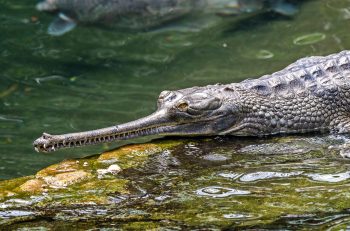
Gharial
Shutterstock
The gharial is a long-snouted crocodilian found in India and Nepal, and it is one of the rarest reptiles in the world. Unlike other crocodiles, it has a slender, tooth-filled snout designed for catching fish rather than attacking large prey. It once thrived in South Asia’s rivers, but habitat destruction and poaching have drastically reduced its numbers. With fewer than 1,000 left in the wild, seeing a gharial is an extremely rare occurrence. Conservationists are working to protect the last remaining populations before this unique reptile disappears forever.
Pangolin
Shutterstock
Pangolins are the only mammals in the world covered in protective scales, making them look like living pinecones. These nocturnal creatures are found in parts of Africa and Asia, but they are incredibly rare due to widespread poaching. Their tough scales help protect them from predators, but unfortunately, they are highly sought after for use in traditional medicine. As a result, pangolins are the most trafficked mammals on the planet, and their populations have declined dramatically. Despite their rarity, they play an essential role in their ecosystems by controlling insect populations.
Kakapo
Shutterstock
The kakapo is a flightless parrot native to New Zealand that is so rare that fewer than 300 exist today. This nocturnal bird is large, round, and covered in greenish feathers, blending perfectly with its forest environment. Unlike most birds, kakapos do not fly; they waddle and climb trees with strong legs. They also have an unusual defense mechanism—when threatened, they freeze in place, which worked well before humans introduced predators like cats and rats. Thanks to dedicated conservation efforts, kakapo numbers are slowly increasing, but they remain one of the rarest birds in the world.
Dugong
Shutterstock
Often mistaken for a mermaid by past sailors, the dugong is a close relative of the manatee and one of the most mysterious marine mammals. Found in warm coastal waters across the Indo-Pacific, dugongs graze on seagrass and are rarely seen near the surface. Despite their gentle nature, they are highly threatened by habitat destruction, boat collisions, and hunting. Their slow reproduction rate makes it difficult for their populations to recover, pushing them toward extinction. Spotting a dugong in the wild is a rare and unforgettable experience.
Sunda Colugo
Shutterstock
The Sunda colugo, also known as the flying lemur, doesn’t actually fly—but it can glide more than 100 meters between trees. This nocturnal mammal is found in Southeast Asian forests, using its large skin flaps to soar through the air. Despite its incredible gliding ability, it is rarely seen due to its excellent camouflage. It clings to tree trunks during the day, blending in so well that most people walk right past it without noticing. Scientists still have many unanswered questions about this fascinating and elusive animal.
Philippine Eagle
Shutterstock
The Philippine eagle, also known as the “monkey-eating eagle,” is one of the rarest and most powerful birds of prey in the world. With a wingspan of up to seven feet, it dominates the skies of the Philippines’ rainforests. However, deforestation and hunting have driven its population to fewer than 400 individuals. It is considered a national treasure in the Philippines, but without stronger conservation efforts, it may disappear entirely. Few people have ever seen this majestic bird in the wild, making it one of the most elusive raptors on the planet.
Okapi
Shutterstock
The okapi resembles a mix between a zebra and a giraffe but is more closely related to the latter. This elusive, forest-dwelling animal was unknown to the outside world until the early 1900s, despite being well-known to locals. Native to the Democratic Republic of Congo, the okapi is rarely seen due to its excellent camouflage and secretive nature. Even scientists struggle to study them, making every confirmed sighting exciting. Their numbers are declining because of habitat destruction and poaching, making them one of Africa’s rarest large mammals.
Japanese Spider Crab
Shutterstock
The Japanese spider crab is a deep-sea crustacean with legs that can stretch up to 12 feet across, making it the largest arthropod on Earth. These crabs live in the cold waters off Japan and are rarely seen by divers due to their extreme depths. Despite their monstrous appearance, they are surprisingly gentle and have a lifespan of over 100 years. Because of overfishing, their populations are declining, and they are becoming harder to find. Seeing one in its natural habitat is an incredibly rare experience reserved for deep-sea explorers.
Tarsier
Shutterstock
With its enormous eyes and tiny body, the tarsier looks like something out of a fantasy movie. Found in Southeast Asia, these small primates are nocturnal hunters that leap between trees to catch insects. Their eyes are so large that they cannot move in their sockets, so they rotate their heads almost 180 degrees like an owl. Despite their adorable appearance, tarsiers are incredibly shy and difficult to find in the wild. Habitat destruction and the illegal pet trade have made them even rarer, pushing some species to the brink of extinction.
Axolotl
Shutterstock
Known as the “Mexican walking fish,” the axolotl is actually a salamander that never undergoes full metamorphosis, remaining in its larval stage for life. Found only in a few lakes in Mexico, this animal can regenerate lost limbs, including parts of its heart and brain. Despite its unique biology, the axolotl is critically endangered due to habitat destruction and pollution. It has gained fame in pet markets and scientific research but is incredibly rare in the wild. Conservationists are now working hard to preserve the last remaining wild populations.
Amur Leopard
Shutterstock
The Amur leopard is one of the rarest big cats in the world, with fewer than 100 individuals left in the wild. Native to the Russian Far East and parts of China, this elusive leopard is known for its thick, luxurious fur and stunning golden spots. Unlike most leopards, it has adapted to snowy environments and can survive extremely cold conditions. Habitat loss and poaching have pushed it to the brink of extinction, making it one of the most critically endangered felines. Conservation programs are slowly helping its numbers recover, but it remains an incredibly rare sight in the wild.
The Wildlife You’ll Only See In Your Dreams
Shutterstock
These creatures prove that nature is weird, wonderful, and sometimes ridiculous. From glowing sea slugs to blind, slippery amphibians, it’s as if evolution had too much fun experimenting. Their extreme rarity makes them nature’s ultimate VIPs, with sightings so scarce that even scientists struggle to confirm their existence. If you ever spot one of these elusive beings in the wild, consider yourself incredibly lucky or in the middle of an elaborate prank. Take a picture—because without proof, no one will believe you.
The post 15 Wild Animals That Are So Rare You’ll Never Believe They Exist appeared first on iHeartDogs.com.