
It’s that time of year again—Easter baskets brimming with colorful treats, family gatherings with elaborate feasts, and spring celebrations in full swing. But as a veterinarian who’s spent more Easter weekends on emergency call than I care to admit, I’ve seen firsthand how quickly this joyous holiday can turn into a crisis for our four-legged family members.
Let me walk you through some Easter hazards that could land your pet in the vet’s office—when you should be enjoying chocolate bunny ears and family time instead.
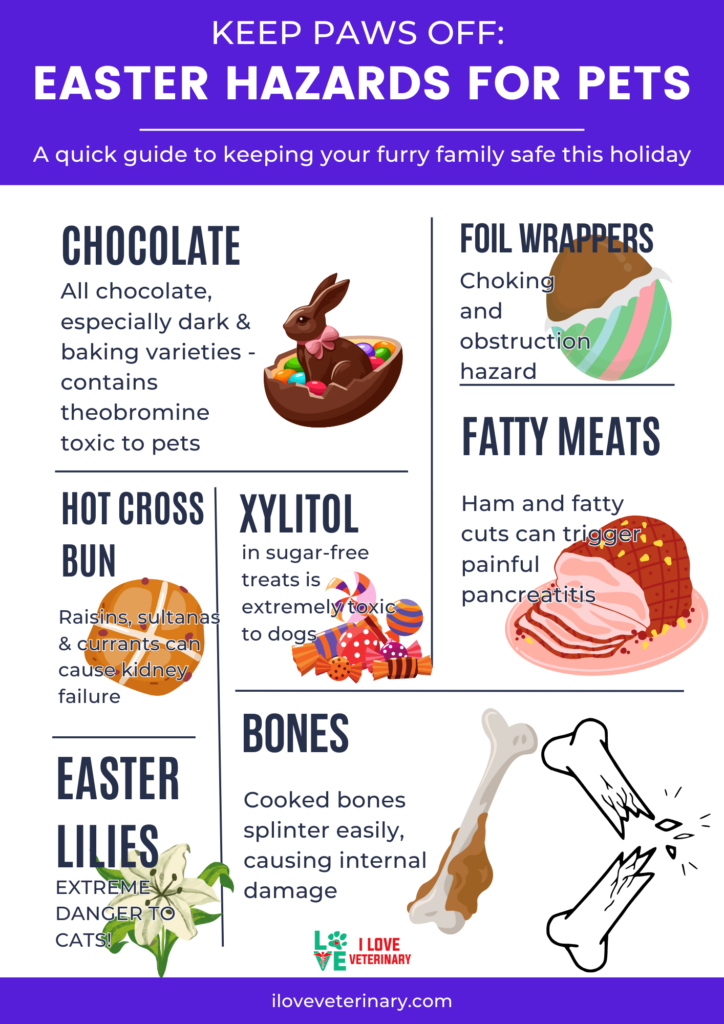
Chocolate: The Perennial Pet Poison
I’ll never forget treating Max, a chocolate Lab who—ironically—lived up to his breed name by devouring an entire basket of Easter chocolate when his family stepped out for church. The irony wasn’t lost on his embarrassed owners, but the serious theobromine poisoning certainly wasn’t funny.
Chocolate toxicity varies by type:
Dark chocolate and baking chocolate contain the highest levels of theobromine and are the most dangerous
Milk chocolate is less toxic but still harmful in sufficient quantities
White chocolate contains minimal theobromine but is still unhealthy due to fat and sugar content
Symptoms of chocolate poisoning include vomiting, diarrhea, increased thirst, restlessness, and in severe cases, abnormal heart rhythm, seizures, and even death. The smaller your pet, the greater the risk—what might just cause an upset stomach in a Great Dane could be life-threatening to a Chihuahua.
Easter Lilies: Beautiful but Deadly
“But they’re just flowers!” This is something I hear often in the emergency room. Truth is, Easter lilies are extraordinarily toxic to cats—and I mean kidney-failure-within-days toxic. All parts of the plant are poisonous: flowers, pollen, leaves, stem, and even the water in the vase.
A cat named Mittens once came into my clinic after simply brushing against lily pollen and grooming it off her fur. Her observant owner noticed unusual drooling and lethargy and brought her in immediately—a decision that likely saved Mittens’ life.
If you have cats, the safest approach is keeping lilies out of your home entirely. For cat owners who receive lilies as gifts, politely explain the danger and suggest pet-safe alternatives like orchids, roses, or sunflowers.
Hot Cross Hazards: Raisins, Currants, and Grapes
Those delicious hot cross buns traditional to Easter contain ingredients that can cause acute kidney failure in dogs and cats. Raisins, sultanas, currants, and grapes have an unknown toxin that affects some pets severely—and frustratingly, we can’t predict which pets will be affected.
I’ve treated dogs who’ve eaten just a handful of raisins and developed kidney failure, while others have consumed larger amounts with minimal effects. This unpredictability makes these fruits a complete no-go for pets.
Chocolate Eggs and Foil Wrappings
Beyond the chocolate danger, those shiny foil wrappings pose a separate threat. The foil can cause intestinal blockages or tears if swallowed. Every Easter, I see at least one surgical case involving foil removal from a pet’s digestive tract.
Easter Dinner Dangers
Your Easter feast contains several potential hazards:
Ham and fatty meats: That glazed spiral ham centerpiece is loaded with salt, sugar, and fat—a recipe for pancreatitis in pets. Pancreatitis causes intense abdominal pain, vomiting, and can be life-threatening.
Cooked bones: Never give your pet cooked bones from your ham, lamb, or other Easter meats. They splinter easily and can puncture the digestive tract or cause blockages.
Onions and garlic: Many Easter side dishes contain these ingredients, which can damage red blood cells in both dogs and cats, potentially causing anemia.
Artificial sweeteners: Many Easter desserts contain xylitol, which is extremely toxic to dogs. Even small amounts can cause dangerous drops in blood sugar and liver damage.
Plastic Easter Grass and Decorations
That colorful plastic “grass” lining Easter baskets is especially enticing to cats, who see it as a perfect play toy. Once ingested, it can cause a linear foreign body obstruction—one of the most dangerous types of blockages, as it can slowly saw through the intestines.
Keeping the Holiday Safe
Here are some practical tips to protect your pets this Easter:
Create a pet-safe zone: Keep your pet in a separate room during Easter egg hunts and basket openings
Count your eggs: If hiding real eggs for hunts, count them before and after to ensure none are left to rot and be discovered by your pet
Use pet-safe baskets: Skip the plastic grass and opt for paper alternatives or pet-safe basket fillers
Secure the trash: Easter celebrations generate a lot of tempting trash—make sure it’s in secured containers
Inform guests: Let visitors know not to feed your pets table scraps, no matter how convincingly they beg
Pet-Safe Easter Treats
Want to include your furry family members in the celebrations? Consider these pet-safe alternatives:
Frozen yogurt drops (plain, unsweetened yogurt)
Carrot sticks or apple slices (no seeds) for rabbits and many dogs
Pet-specific Easter treats from reputable pet stores
New toys wrapped in pet-safe paper
Remember, if you suspect your pet has consumed something toxic, don’t wait for symptoms to appear. Contact your veterinarian or an emergency animal hospital immediately. The ASPCA Animal Poison Control Center (888-426-4435) is also available 24/7 for guidance.
Easter should be a time of joy for the entire family—pets included. With a bit of awareness and preparation, you can ensure everyone has a safe and happy holiday!
Easter Foods Toxic to Pets
Chocolate (all varieties, especially dark and baking chocolate)
Hot cross buns containing raisins, sultanas, or currants
Grapes (can cause kidney failure in some pets)
Easter ham and other fatty meats (can trigger pancreatitis)
Cooked bones from holiday meats (risk of splintering and intestinal damage)
Onions and garlic in side dishes (can cause anemia)
Xylitol in sugar-free candies and baked goods (extremely toxic to dogs)
Alcohol in holiday beverages and some desserts
Macadamia nuts sometimes found in Easter cookies and cakes
Coffee and caffeine products that might be more accessible during gatherings
Salty snacks like pretzels and chips (can cause excessive thirst/urination)
Yeast dough for rolls and breads (can expand in stomach causing pain/bloating)
Non-Food Easter Hazards
Easter lilies and all lily varieties (potentially fatal to cats)
Daffodils (bulbs are especially toxic)
Tulips (primarily the bulbs)
Hyacinths (can cause severe gastrointestinal upset)
Plastic Easter grass (intestinal obstruction risk)
Foil egg wrappers (choking and obstruction hazard)
Small toys in Easter baskets (choking risk)
Easter egg dyes if not fully dried or non-toxic
Decorative plastic eggs (choking or obstruction if chewed and swallowed)
Basket ribbons and bows (intestinal blockage risk if swallowed)
Fertilizers used for spring lawn preparation around Easter
Wooden skewers from appetizers or Easter meals
Naphthalene mothballs sometimes used in spring clothing storage
Spring cleaning products that may be more accessible during holiday preparations