
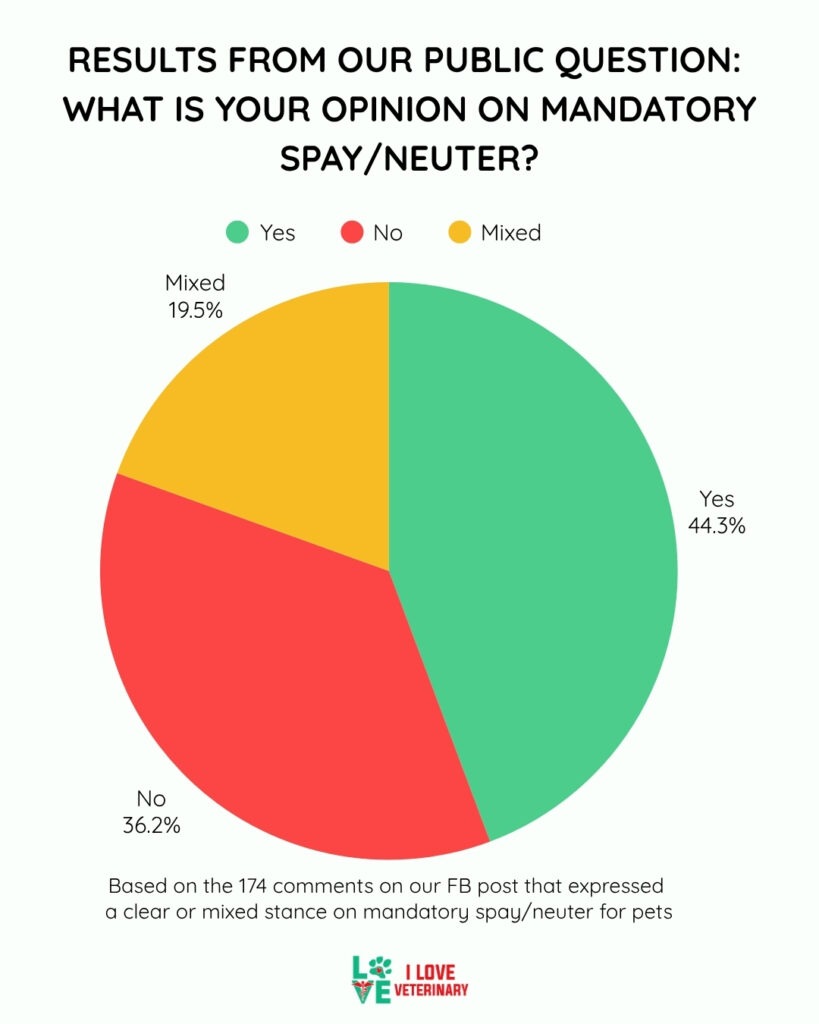
The question of whether spaying and neutering pets should be mandatory is a deeply divisive issue, sparking passionate debate among pet owners, breeders, rescue organizations, and veterinary professionals. A recent discussion in the comments section of a Facebook post (viewable at: https://www.facebook.com/photo?fbid=1137641701727539&set=a.628885569269824) highlighted the varied perspectives on this complex topic.
In Favor: Addressing Pet Overpopulation
Arguments for mandatory spay/neuter often center on the issue of pet overpopulation. Supporters point to the vast numbers of animals in shelters and the high rates of euthanasia. As one commenter passionately stated:
“YES ! I’m for it and if your not look at your local shelter and volunteer!! To many dogs and cats need adopted…”
Proponents believe that widespread spaying and neutering is a crucial step to reduce the number of unwanted litters and alleviate the burden on animal shelters. Some also support the idea with certain caveats, noting:
“Proven reputable breeders should be exempt as well as some others that meet certain criteria. But overall YES. I can only imagine how many resources would open up to help animals in need if everything wasn’t overcrowded.”
Against: Concerns Over Rights, Health, and Breeding
Conversely, those against mandatory spay/neuter raise concerns about individual rights, potential health impacts on animals from the procedures (especially if done too early), and the preservation of purebred lines. Many argue for the importance of responsible pet ownership and ethical breeding practices rather than blanket mandates.
“No. We need reputable breeders literally to continue to have dogs,”
one person commented, adding,
“What we do need is stricter laws regarding breeding and I would agree with ensuring every shelter pet/rescue everywhere needs to be altered.”
Another opponent expressed concerns about health and breeder impact:
“Against it. Not healthy for the dogs, punishes good breeders and can wipe out endangered breeds. I support good breeders and the preservation of purebred dogs.”
The principle of mandates themselves is also a point of contention, with some suggesting:
“Don’t like mandates. Making free spay/neuter would be better along with transportation for those who don’t have any. Mandates will do nothing for those can’t afford veterinary care.”
Nuanced Views: Conditions, Costs, and Questions
Many comments reflected a mixed or conditional stance. These often highlighted the practical challenges and complexities of implementing such a mandate. Questions around enforcement, cost, and exceptions were common.
“For whom? Who will enforce? Who will perform the procedures? Who pays? What’s the timeline? Who decides when to grant exceptions?… Way too many questions to give this an answer,”
one individual mused. The financial burden of the procedure was also a significant theme, with a commenter pointing out:
“I think more people would if it was financially in thier grasp. Where I live it can be well over $1000.”
The discussion underscores that while there’s a shared concern for animal welfare, opinions on the best approach to managing pet populations and responsible ownership vary significantly. Any potential policy on mandatory spay/neuter would need to navigate these deeply held beliefs and practical considerations.