
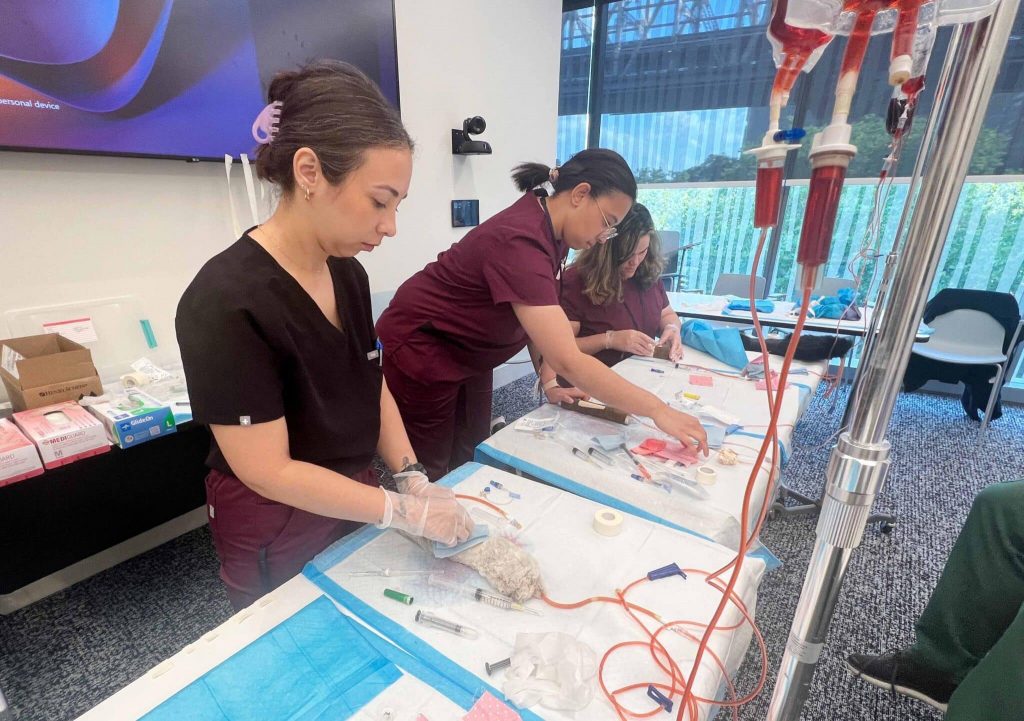
We had a “Lost in Translation” moment last week in the clinic. While discussing the need to place a catheter in a patient to administer chemotherapy, the pet’s family asked, “How will he urinate if there’s a catheter in his bladder to administer chemotherapy?”
We were talking about an intravenous catheter, and they were talking about a urinary catheter. After a bit more chatting, we cleared up the misconception, but I suspect this family is not the only one with questions about catheters—and that is the subject of this blogpost.
What is a catheter?
A catheter is simply a hollow tube placed in the body to move fluid either from inside the body to the outside, or vice versa. For example, we might use a catheter to deliver saline to rehydrate a dehydrated patient or to deliver liquid anti-nausea medication to a vomiting pet. We also use catheters to facilitate frequent blood sampling in an ICU patient or to drain urine from a cat with a urinary obstruction.
Catheters are sophisticated medical devices. They are sterile and specially coated to facilitate smooth placement. Some contain balloons which, when inflated, hold the catheter in place.
Intravenous Catheters
The most common catheter we use at the Schwarzman Animal Medical Center is an intravenous catheter. Patients hospitalized overnight typically receive fluid therapy, antibiotics and other medications through these intravenous lines. Patients here for just the day might have a catheter placed to administer chemotherapy or a special intravenous dye for a CT scan or MRI. For pets staying in our Intensive Care Unit (ICU), clinicians sometimes place a “triple lumen” catheter, which is three catheters in one. The triple lumen catheter allows simultaneous infusion of multiple medications and is reserved for critically ill pets.
Urinary Catheters
Veterinarians use urinary catheters in several situations. The obvious use is when a pet cannot pass urine normally due to a stone or tumor blocking the urethra. In these instances, our ER veterinarians will slip a very small catheter past the obstruction to allow urine to flow normally.
In pets with acute kidney injury, placing a urinary catheter allows us to measure urine output and replace that volume with intravenous fluids. This technique of managing fluid balance is called “ins and outs.”
Specialized Catheters for Unique Situations
While intravenous and urinary catheters are the most common catheters veterinarians use, there are other specialized catheters available for the right situation:
Intraosseous catheters are placed directly into bone. AMC’s ER might use this type of catheter for very small patients with collapsed blood vessels that prevent intravenous catheter placement. As crazy as it sounds, delivering fluids into the hollow center of a bone effectively distributes medication throughout the body, which can be life-saving.
Implanted chemotherapy ports are occasionally used by veterinary oncologists in cancer patients to facilitate chemotherapy administration. The Princess of Wales actually referred to her implanted catheter or chemotherapy port in an interview following her recovery from cancer.
Cardiac catheters are used by AMC cardiologists to treat heart malformations. These deploy a balloon or a coil to block off an abnormal blood vessel called a patent ductus arteriosus.
The catheter allows the cardiologist to infuse dye into the heart, confirming proper balloon or coil placement before they deploy it.
Catheter Clarification
If your veterinarian mentions the need for a catheter in your pet, be sure to ask “What kind?” because now you know there are many kinds of catheters, each serving a specific medical purpose.