
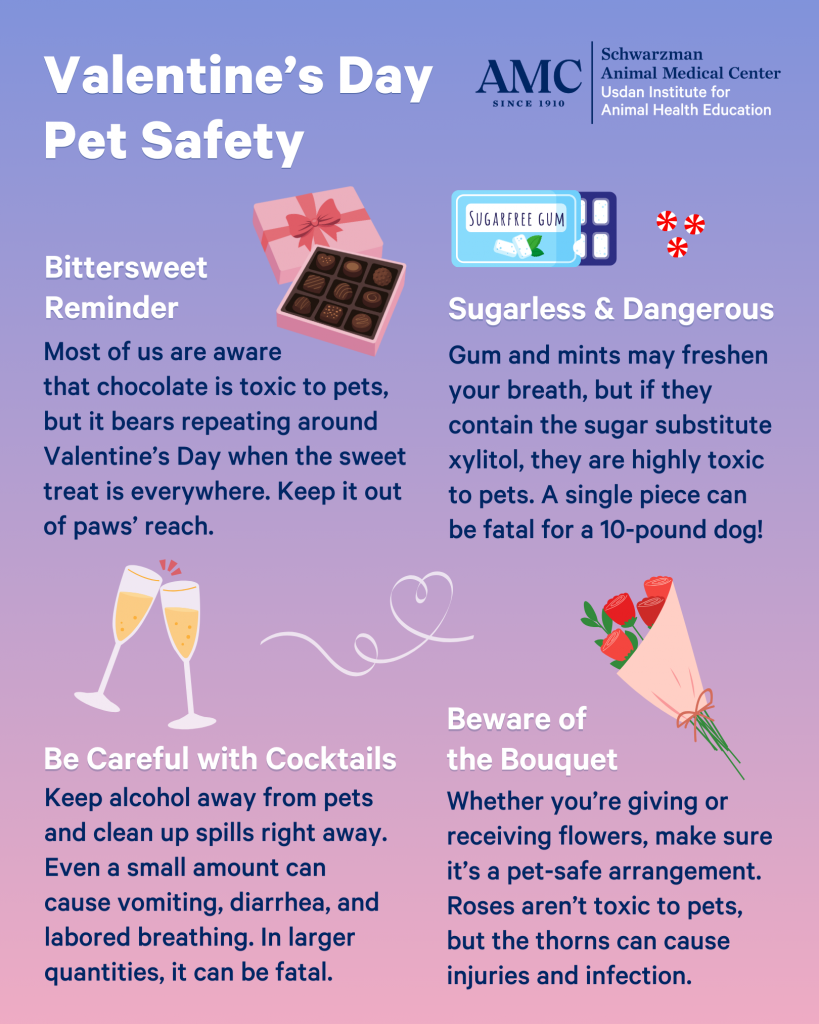
Valentine’s Day is full of sweet traditions—chocolate, flowers, and gifts—but some of the most common holiday staples can become serious pet hazards.
Pet insurance companies don’t just help pet families afford veterinary care—they’re also a rich source of data to help us understand how often certain illnesses and injuries occur. While insurance data is not collected with the scientific rigor of a research study, it can provide a useful snapshot of pet care trends.
In this blogpost, I’ll look at what pet insurance claim data suggests about common health issues in dogs and cats, and what it may reveal about Valentine’s Day hazards.
Common Canine Conditions Based on Pet Insurance Claims
Using the Nationwide Insurance database, Dogster reports skin issues as the most common insurance claim category for dogs. This category has a broad definition and includes allergies and skin masses.
This finding is strikingly similar to the most read blogposts on our blog, which included skin-related topics such as lipomas, mast cell tumors and hot spots (a common manifestation of canine allergies).
The fact that these two different sources give similar results suggests the information is a reliable picture of common canine conditions.
Frequent Feline Frailties Based on Pet Insurance Claims
Trupanion reports their top insurance claims for cats is for chronic kidney disease. Again, the insurance claim data matches our most popular blogpost list, as chronic kidney disease is our top feline blogpost.
Worldwide, chronic kidney disease is one of the most common causes of death in pet cats, explaining why there are so may insurance claims for this disease.
Valentine’s Day Pet Hazards: A Surprising Claim Trend
When I read the headline “Which Valentine’s Day Gift Has Proven Most Hazardous to Pets?”, I thought chocolate would surely be the culprit given its ubiquitous presence on Valentine’s Day and, frankly, every day.
But Trupanion’s data tells a different story. According to their insurance claims, since 2019 the most common claims near Valentine’s Day involved dogs and jewelry, totaling roughly 21,000 claims. This surge in jewelry related claims parallels the surge in jewelry purchases for Valentine’s Day.
In comparison, claims for chocolate intoxication were far fewer—about 1,700 over the last 6 years.
While I was unable to find out any details of exactly how jewelry became the top Valentine’s Day hazard, the claim volume suggests it’s a major and underappreciated risk.
Bottom Line: Pet Insurance Data Can Help Pet Owners Stay Ahead of Holiday Hazards
Insurance data can be very useful to veterinarians and pet owners alike. Around Valentine’s Day, it suggests that while chocolate remains a classic risk, jewelry ingestion may be an even more common cause of veterinary visits for dogs.
As we approach the holiday, remember the safest gift you can give your pet is prevention: keep your chocolate and jewelry away from pets, and don’t underestimate what a curious dog will swallow.