
A quiet moment of scrolling turned into something far more urgent when a troubling online listing appeared. What seemed like an ordinary sale quickly revealed a deeper issue involving wildlife that should never be treated as commodities. Behind the photos and price tags were living creatures taken from their natural home, confused and vulnerable. For one concerned viewer, it was impossible to ignore. That single discovery sparked a chain of action, bringing together rescuers determined to step in before it was too late for the animals involved.
Earlier this month in South Africa, a concerned individual came across leopard tortoises being sold on Facebook Marketplace for 1500 rand, or roughly $88, each. While these tortoises are commonly found in the region, they are protected by law. Capturing and selling them is illegal, yet this listing suggested otherwise.
Disturbed by what they saw, the individual quickly alerted the South African Police Service’s Stock Theft and Endangered Species Unit, along with the Limpopo Pangolin Collective. This nonprofit works tirelessly to protect animals caught in the illegal wildlife trade.
Authorities decided swift and careful action was needed.
An undercover agent from the Limpopo Pangolin Collective agreed to pose as a buyer. To protect their identity and continue their work safely, the agent remained anonymous. After arranging a deal with the seller, they traveled nearly 200 miles, carrying both urgency and hope.
A Bucket Full of Silent Suffering
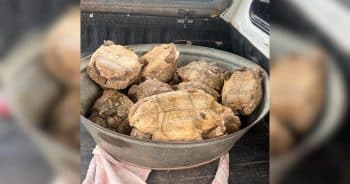
When the agent arrived, the sight was difficult to process. Fourteen leopard tortoises, each with their own story, were crammed together in a single bucket in the back of a truck.
They were weak. They were frightened. They had been taken from the wild and left to endure days, possibly weeks, of neglect.
According to Umoya Khulula Wildlife Centre, more than half of the tortoises were severely underweight. Every single one showed signs of dehydration and extreme stress. Their bodies reflected the hardship they had endured, but their quiet resilience remained.
The agent suspected the poachers had been collecting these tortoises since mid-January. Many buyers, they explained, want them as easy pets for children. They are often placed in small garden enclosures and fed improper diets, such as lettuce and carrots.
But these animals are not meant for that kind of life.
Leopard tortoises thrive on native plants, fruits, and grasses. In the wild, they roam freely, growing large and living for decades. Their beautifully patterned shells are a symbol of nature’s artistry, not something meant to be confined.
A Second Chance at Freedom
Despite their condition, there was still hope.
Rescuers acted quickly to stabilize the tortoises. With proper care, hydration, and nutrition, their strength slowly began to return. Bit by bit, their natural behaviors started to reappear.
Ten of the tortoises have already been released back into their natural habitat. The remaining four are still receiving care, but they are improving each day. Soon, they too will return to the wild where they belong.
Their journey is a reminder of both the cruelty they faced and the compassion that saved them.
As Umoya Khulula Wildlife Centre shared, these animals are not objects to own or display. They are living beings with a place in the wild, where they can move freely and live as nature intended.
Their story could have ended very differently. Instead, it became one of rescue, recovery, and a return to freedom.
Click ‘SHARE’ below to pass it on to family and friends!
The post 14 Protected Tortoises Were Being Sold Online Until a Secret Sting Shut It Down appeared first on iHeartDogs.com.