
According to the American Animal Hospital Association, April 19th is Crazy Cat Lady Day. I have to admit — I had never heard of this day before. Frankly, I wasn’t even sure where the term “crazy cat lady” came from or who might have inspired it. Full confession: I sometimes worry about being labeled a crazy cat lady myself when my office at the Schwarzman Animal Medical Center fills ups with a litter of foster kittens. So, I decided to treat Crazy Cat Lady Day as a learning opportunity, and this blogpost will report my findings on the topic.
Ancient Egyptians Were Clearly Cat-Crazy
Were ancient Egyptians the original “crazy cat ladies”?
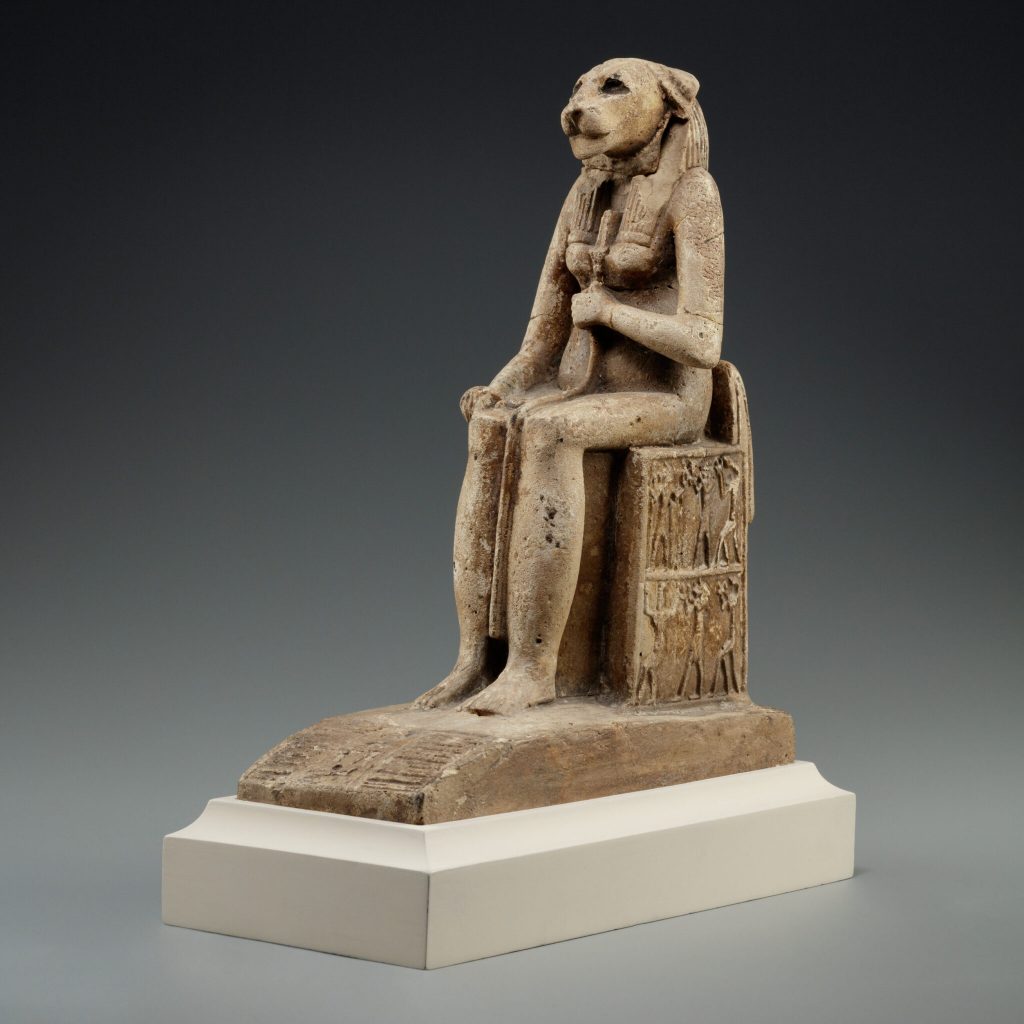
The goddess Bastet—often portrayed with the head of a cat or lion—was the daughter of the Sun God Ra and a powerful symbol of protection, prosperity and fertility. Her importance is clear in the elaborate statuary created in her honor from the Late Period through the Ptolemaic Period (664–30 BC). The cult of Bastet was headquartered in Bubastis, in the Nile Delta, where archeologists have uncovered thousands of cat mummies and cat statuettes in the area’s catacombs.
However, the Egyptian craze for cats may have been practical as well as spiritual. The fertile Nile Delta has been an agricultural hub for millennia, and cats would have been essential for rodent control to protect grain stored for human consumption.
A Medieval “Cat Lady”?
Another candidate for the original crazy cat lady is St. Gertrude of Nivelles (628 – 659 AD). Today, St. Gertrude is known as the patron saint of cats and is often portrayed with a cat in her arms, but in the Middle Ages, she was typically depicted surrounded by rats.
During a time of plague and other rodent-borne disease, St. Gertrude was venerated as a protector against rats and mice, therefore her modern-day association with cats is logical. Still, this likely eliminates her from contention as the original crazy cat lady.
During the Middle Ages, black cats were thought to be manifestations of the devil and were often linked with witches and witchcraft. This may be when the negative connotations around the “crazy cat lady” stereotype began to take shape.
From Pop Culture to Politics
In modern times, the “crazy cat lady” label has taken on new meaning. Pop star Taylor Swift is a self-avowed cat lady, and her cats – two Scottish folds and a Ragdoll – have become celebrities in their own right.
The phrase also resurfaced in the political spotlight during the 2024 president election cycle, when a 2021 comment by VP candidate JD Vance referring to Democrats as “childless cat ladies” resurfaced. Swift – who appeared on the cover of Time Magazine as the 2023 Person of the Year holding her Ragdoll cat, Benjamin Button – responded by endorsing Kamala Harris in an Instagram post signed: “Taylor Swift, childless cat lady.”
Reclaiming the “Cat Lady”
According to the article published by the American Animal Hospital Association, Crazy Cat Lady Day exists “to challenge outdated stereotypes and celebrate women who are devoted cat owners and caretakers.”
Seen in this light, the “cat lady” is not a caricature, but a reflection of something more positive: independence, compassion, and a deep commitment to animal care. From the ancient Egyptians and St. Gertrude to modern celebrities like Taylor Swift, cat lovers have long played meaningful roles in both culture and community.
And as for those of us with offices full of foster kittens — we might just be in very good company.