
As the United States prepares to celebrate 250 years since the signing of the Declaration of Independence, I started to wonder about pets and veterinary care 250 years ago. I did a little digging, and here is what I found about veterinarians and pets of the founding fathers and mothers during the revolutionary period.
Did George and Martha Washington have pets?
The answer to this question is an emphatic yes. The website of George Washington’s estate, Mount Vernon, has extensive information about the Washingtons’ dogs.
These dogs included working, sporting and hunting dogs housed in a kennel on the grounds of Mount Vernon. At the time of her marriage to General Washington, Martha Washington also had a house dog, thought to be a spaniel, named Chloe. In her later years, she had another spaniel named Frisk.
Descendants of George Washington’s dogs can still be seen at dog shows today. French hounds given to President Washington by the Marquis de Lafayette were bred with Washington’s English Foxhounds, creating the breed now recognized by the American Kennel Club as the American Foxhound.
Who were the first canine residents of the White House?
The first human residents of the White House were John and Abigail Adams, the second president and first lady of the United States. They brought their dogs, Juno and Satan, with them from their home in Massachusetts.
Not much is known about these dogs, except through Abigail’s prolific correspondence with her son, John Quincy Adams, the sixth president. Harvard College educated, John Quincy Adams was a poet as well as a President and, in a letter that can be found in the Massachusetts Historical Society, Abigail requests that he write a poem to immortalize Juno. She compared the dog to figures of antiquity and literature, asking why Juno shouldn’t also be celebrated in verse like the famous pets of Homer, Johnson and Cowper. Clearly, dogs of the Revolutionary period were as beloved as they are today.
Who would have taken care of the Adams and Washington pets?
Veterinary schools existed in 1775, but not in our fledgling nation. Both schools were in France. The veterinary schools in Lyon and Alfort, near Paris, continue to educate veterinarians to this day. Since the veterinary school in Lyon was founded in 1761, I thought perhaps the Marquis de Lafayette would have brought a veterinarian with him, to care for his horses when he came to support the American patriots, but I could not find confirmation of that theory.
Today, our military has many veterinarians who care for the working animals of our armed forces. In 1776, General George Washington recognized the need for veterinary expertise and directed that a “regiment of horses with a farrier” be raised.
In the United States, at that time, farriers provided care to horses. Today, we think of farriers as the specialists who clean, trim and shoe horses’ hooves.
I suspect that, beyond basic first aid, the pets of the Revolutionary War period had limited medical care. Vaccines did not exist, aseptic surgery was still a century away and the United States did not have its first veterinary school until 1852, when the Veterinary College of Philadelphia opened.
The country and the veterinary profession have come a long way in the past 250 years. The United States now has 36 accredited schools of veterinary medicine.
Want to learn more about the founding mothers?
In case your family is interested in learning more about our country’s Founding Mothers, journalist Cokie Roberts wrote a history for adults and a picture book for children.
Preparing Pets for America’s 250th Birthday Celebration
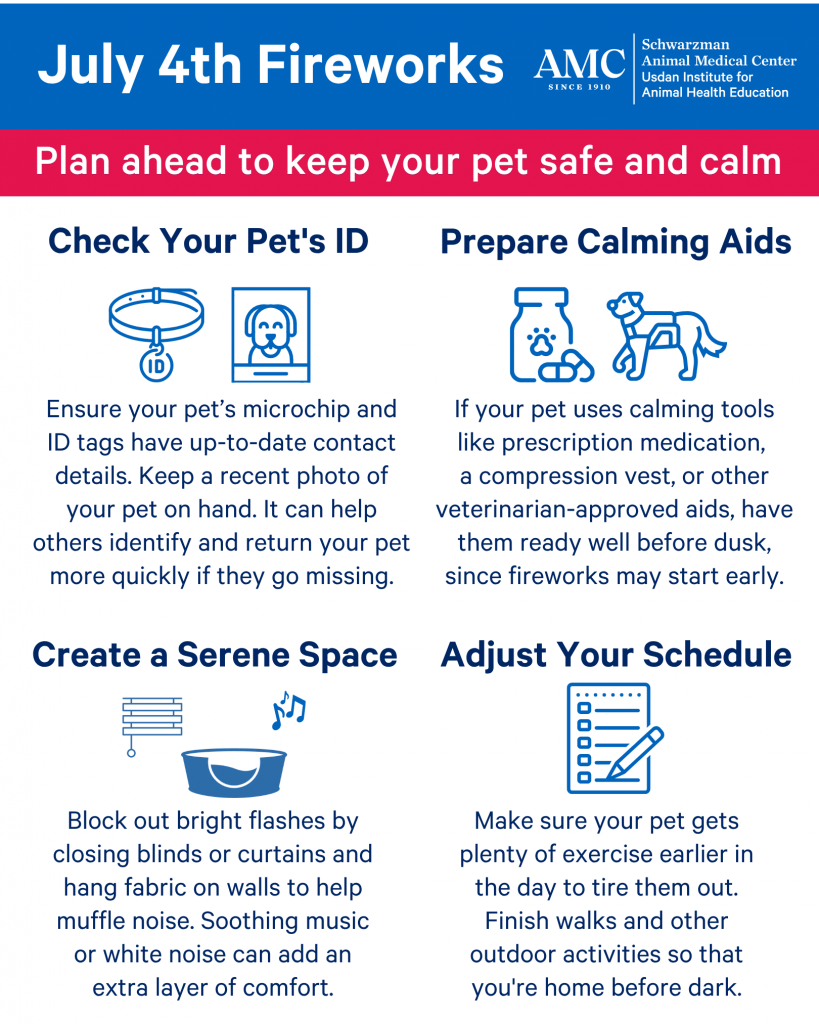
Your pets may not be as interested in celebrating our country’s 250th birthday as you are. Before the fireworks and festivities begin, be sure to check with your veterinarian for tips on managing fireworks noise phobia. If your pet takes anti-anxiety medication, this is also the time to request a refill so your pet is prepared for the holiday.