
You picked up a urinalysis report at the vet, and the word “crystalluria” is staring back at you. So, what does that actually mean, and should you be worried? Crystals in dog urine sound alarming, but they aren’t always a crisis. Sometimes they’re a normal blip.
Other times, they’re the first quiet warning that bladder stones are on the way. This guide walks through every type of crystal a vet might find, what causes them, which breeds are prone, and what treatment looks like in 2026. You’ll leave knowing what your vet is really saying, and what to ask next.
What Are Crystals in Dog Urine?
Urine is basically filtered waste. It carries minerals, salts, and other compounds that the kidneys pull out of the blood. When the urine gets too concentrated with any of those minerals, they can drop out of solution and form microscopic solids. Those solids are crystals.
Vets define crystalluria simply as the presence of crystals in the urine, and crystals are just concentrates of naturally occurring minerals. They can appear in perfectly healthy dogs, especially in a sample taken after a meal or a nap, when urine is highly concentrated.
Here’s the important part. Crystals are the building blocks of bladder stones, but their presence doesn’t guarantee stones will form. A few crystals in one sample rarely mean disaster. Persistent crystals are the ones your vet cares about.
The Main Types of Crystals in Dog Urine
Not all crystals are equal. The type your vet finds under the microscope tells them a lot about what’s happening inside your dog, and which treatment path to take.
Struvite Crystals (Magnesium Ammonium Phosphate)
Struvite is the most common crystal in dogs. It forms in alkaline urine, and it’s often tied to urinary tract infections. Bacteria like Staphylococcus and Proteus produce an enzyme that raises urine pH, which sets up perfect conditions for struvite to precipitate.
Female dogs get struvite more often than males because UTIs are more common in females.
Calcium Oxalate Crystals
Calcium oxalate forms in acidic urine and is much harder to reverse than struvite. It’s the crystal type most tied to genetic predisposition. Veterinary data shows a high relapse rate, with one study reporting a 50% relapse within 2 years in dogs. That’s why prevention matters so much once it’s identified.
Ammonium Urate (Uric Acid) Crystals
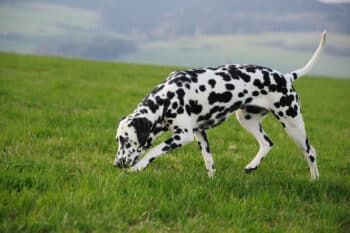
Urate crystals often point to a liver problem, especially portosystemic shunts, or to a genetic mutation in purine metabolism. Dalmatians are the classic example because of a well-documented gene variant that affects how they process uric acid. English Bulldogs and Black Russian Terriers are also at risk.
Cystine Crystals
Cystine crystals point to an inherited kidney defect called cystinuria, where the kidneys leak the amino acid cystine into the urine. It’s most often seen in Newfoundlands, Dachshunds, English Bulldogs, and Mastiffs. Intact male dogs are especially vulnerable.
Calcium Phosphate and Silica Crystals
These are less common, but they still turn up. Calcium phosphate often shows up alongside struvite in alkaline urine. Silica crystals are rare and sometimes linked to diets heavy in plant-based ingredients like corn gluten or soybean hulls.
Bilirubin Crystals
A few bilirubin crystals are normal in concentrated urine from male dogs, since bilirubin comes from the breakdown of red blood cells. But a lot of them in a dilute sample can hint at liver disease or a hemolytic problem. Your vet will likely recommend bloodwork to dig deeper.
Symptoms of Crystals in Dog Urine
Here’s the tricky part. Crystals themselves usually cause no symptoms at all. Your dog isn’t in pain, and behavior looks completely normal. Vets often catch them by accident during a routine urinalysis.
Veterinary experts at FirstVet confirm that on its own, crystalluria does not lead to symptoms of lower urinary tract problems. Symptoms show up when crystals have already grown into bladder stones or when there’s a concurrent infection. Watch for these signs:
Frequent trips outside with only small amounts of urine
Straining or crying while urinating
Blood in the urine (pink, red, or coffee-colored)
Licking at the genital area more than usual
Accidents in the house from an otherwise trained dog
A weak, dribbling stream instead of a normal flow
Cloudy or unusually smelly urine
Increased thirst and urine volume
If your dog is straining hard and nothing is coming out, treat it as an emergency. A full urinary obstruction is life-threatening within 24 to 48 hours. Male dogs are at higher risk because their urethra is longer and narrower.
What Causes Crystals in Dog Urine?
Several factors push a dog’s urine into crystal-forming territory. Usually, more than one is at play.
Diet and Mineral Balance
Food shapes urine chemistry more than anything else. Diets very high in magnesium, phosphorus, or calcium can push those minerals into the urine at levels the body can’t dilute. Foods heavy in purines, like organ meats and certain fish, can drive up uric acid. Even the ratio of protein to carbs affects urine pH.
Urine pH
pH is the whole ballgame. Struvite loves alkaline urine, and calcium oxalate loves acidic urine. According to PetMD, potassium citrate is sometimes prescribed to normalize urine pH and reduce the formation of calcium oxalate stones. Diet, infection, and metabolism all nudge pH one way or the other.
Dehydration and Concentrated Urine
When a dog doesn’t drink enough, urine becomes concentrated, and minerals crowd together. This is why some dogs only show crystals in morning samples, when urine has been sitting overnight in the bladder. Fresh water, all day, is your simplest defense.
Urinary Tract Infections
UTIs raise urine pH and add debris and bacteria that give minerals something to cluster around. Struvite crystals and UTIs go hand in hand in dogs, especially female dogs.
Genetic Predisposition
Two dogs on the same food can have very different results. When this happens, it usually comes down to a genetic tendency toward mineral overproduction. Breed matters a lot here.
Underlying Medical Conditions
High blood calcium, kidney disease, Cushing’s disease, Addison’s disease, liver shunts, and certain cancers can all push crystals into the urine. That’s why your vet may run bloodwork alongside a urinalysis if crystals keep appearing.
Medications and Timing
Some medications and even the timing of the urine sample can affect what shows up. A post-meal sample often has more crystals than a fasting one. That’s why vets sometimes ask for a first-morning collection.
Which Dog Breeds Are Most at Risk?
Certain breeds carry a genetic setup that makes one crystal type more likely. If you own one of these dogs, ask your vet about baseline urine screening, especially as your dog ages.
Struvite: Miniature Schnauzers, Shih Tzus, Bichon Frises, Miniature Poodles, Cocker Spaniels, Lhasa Apsos
Calcium oxalate: Miniature Schnauzers, Yorkshire Terriers, Lhasa Apsos, Miniature Poodles, Bichon Frises, Shih Tzus
Ammonium urate: Dalmatians, English Bulldogs, Black Russian Terriers
Cystine: Newfoundlands, English Bulldogs, Dachshunds, Mastiffs, Bassett Hounds
Notice how Miniature Schnauzers show up twice? They’re famously prone to urinary trouble across the board, so their owners should be extra vigilant about hydration and regular checkups.
How Vets Diagnose Crystals in Dog Urine
The core test is a urinalysis. Your vet examines a fresh urine sample under a microscope and checks pH, specific gravity, protein levels, and the presence of blood, bacteria, or crystals.
One catch worth knowing. Urine that sits in a sample cup can form crystals that weren’t there in the bladder. Vets at Bella and Duke emphasize that the sample needs to be fresh, ideally still warm, when examined. If your vet asks you to bring in a same-morning sample, that’s why.
If crystals show up, or if your vet suspects stones, further tests may follow:
Urine culture to identify any bacterial infection
Blood chemistry panel to check kidney and liver values and calcium levels
Abdominal X-ray to look for radiopaque stones like struvite and calcium oxalate
Ultrasound to find stones that don’t show up on X-ray, like urate and cystine
Stone analysis if a stone is retrieved, so treatment can be tailored
Treatment for Crystals in Dog Urine
Treatment depends entirely on the type of crystal, whether stones are already present, and whether an infection is involved. Your vet will build a plan around your dog. Here’s what those plans usually look like.
Prescription Therapeutic Diets
Diet is the workhorse of crystal management. Struvite crystals are typically dissolved by making the urine more acidic. Calcium oxalate is managed by making the urine less acidic and reducing the calcium and oxalate load.
Common dissolution diets for struvite include Royal Canin Urinary SO, Hill’s Prescription Diet c/d Multicare, and Purina Pro Plan UR Ox/St. These aren’t over-the-counter foods. They’re formulated to hit precise mineral and pH targets. Swapping in a lookalike from the pet store can undo months of progress.
Increased Water Intake
Diluted urine is the enemy of crystal formation. Your vet may recommend wet food, adding water to kibble, using a pet fountain, or feeding sodium-enriched prescription food that gently increases thirst. The goal is more water in, more urine out, and less mineral concentration.
Treating Underlying Infections
If bacteria are driving struvite formation, antibiotics are non-negotiable. Even during stone dissolution, bacteria trapped in the layers of a stone can be released as it breaks down. That’s why some vets prescribe antibiotics through the entire dissolution period.
Medications for pH and Mineral Control
Potassium citrate is common for calcium oxalate to alkalinize urine and bind free calcium. Allopurinol may be used for urate crystals to reduce uric acid production. Your vet chooses based on crystal type and any coexisting conditions.
Surgery or Non-Surgical Stone Removal
If stones are too large to dissolve, or if there’s a risk of obstruction, your vet may recommend a cystotomy (bladder surgery), a minimally invasive procedure like cystoscopy, or lithotripsy. Emergency obstruction is a life-threatening surgical situation and shouldn’t wait.
How to Prevent Crystals from Coming Back
Prevention is where you, the owner, do the heavy lifting. Once your dog has had crystals, the odds of recurrence are real, especially with calcium oxalate. Here’s what actually helps.
Keep the water flowing. Multiple bowls around the house, refreshed daily. A pet fountain gets many dogs to drink more.
Feed wet food or add water to kibble. Even a splash of warm water on dry food raises daily hydration.
Stick to the prescribed diet. No table scraps, no “just this once” treats that aren’t approved. One bad week can restart the whole problem.
Give more potty breaks. Urine that sits in the bladder for hours is more concentrated. Frequent bathroom trips help flush the system.
Recheck urine on schedule. Your vet will set a recheck timeline, often at 2 to 4 weeks after starting therapy, then every few months.
Test pH at home if your vet recommends it. Simple urine strips can flag a drift toward the danger zone.
Treat every UTI early. Don’t wait it out. UTIs are the top driver of struvite recurrence.
A quality urinary supplement may also help support bladder and kidney health as part of a broader plan, but always clear it with your vet first so it doesn’t clash with prescription therapy.
When to Call the Vet Right Away
Crystals themselves aren’t usually an emergency. Stones and blockages absolutely are. Call your vet now if you notice:
Straining to urinate with little or nothing coming out
Crying, pacing, or restlessness paired with urinary trouble
A hard, distended belly
Vomiting alongside urinary symptoms
Blood clots or bright red urine
Lethargy or refusing food along with urinary changes
A urinary obstruction can kill a dog within a day or two. Male dogs are at higher risk because of their longer, narrower urethra. If you’re second-guessing, go in. It’s cheaper than an emergency surgery, and it might save your dog’s life.
Frequently Asked Questions
1. Are crystals in dog urine dangerous?
By themselves, no. A small number of crystals in one sample is often harmless and can appear in perfectly healthy dogs. Danger comes when crystals persist, form stones, or block the flow of urine. That’s why your vet will want to know the type, the amount, and whether they show up on repeat samples.
2. Can crystals in dog urine go away on their own?
Sometimes. A one-off finding often resolves with better hydration and a diet tweak. Struvite crystals tied to a UTI usually clear once the infection is treated. Calcium oxalate and cystine crystals rarely disappear without ongoing management.
3. What food is best for a dog with crystals in urine?
The right food depends entirely on the crystal type. Struvite needs an acidifying, urine-diluting diet. Calcium oxalate needs an alkalinizing, low-oxalate diet. Ask your vet which prescription food matches your dog’s crystal type, and stick to it.
4. How long does it take to dissolve crystals or stones in a dog?
Struvite stones can dissolve on a prescription diet in as little as 2 weeks, but complete dissolution can take up to 3 months. Calcium oxalate, cystine, and urate stones don’t dissolve on diet alone, so those usually need removal.
5. Can dehydration cause crystals in dog urine?
Yes. Concentrated urine is a major setup for crystal formation. Dogs who drink poorly, live on dry food only, or don’t get enough potty breaks are more likely to develop crystals. Boosting water intake is one of the simplest, most effective prevention steps.
6. Do puppies get crystals in their urine?
They can. Puppies of predisposed breeds may show early urate or cystine crystals, and puppies with congenital liver shunts often develop urate crystals at a young age. If your puppy has straining, blood in urine, or repeated UTIs, ask for a urinalysis right away.
What Every Dog Owner Should Take Away
Crystals in dog urine aren’t a diagnosis on their own. They’re a clue. Your vet uses the type, the amount, and the whole clinical picture to decide whether it’s a nothing-burger or a real problem.
Most dogs with crystals do well once diet, water, and any infection are addressed. Your job is simple, if not always easy. Keep water available everywhere. Stick to the prescribed food, even when your dog gives you the sad eyes.
Show up for rechecks. And if you see straining, blood, or a dog who suddenly can’t pee, don’t wait. That trip to the emergency vet is the difference-maker. With the right plan and a little vigilance, crystalluria is manageable.
Sources
PetMD: Urine Crystals in Dogs, Causes and Treatment
Wag! Veterinary: Crystals in the Urine in Dogs
FirstVet: Urine Crystals in Dogs, Should You Be Concerned?
Embrace Pet Insurance: Urine Crystals in Dogs and Cats
Bella and Duke Veterinary Advisor: Urinary Crystals in Dogs
The post Crystals in Dog Urine: Causes, Symptoms, and Treatment (2026 Vet Guide) appeared first on iHeartDogs.com.