
According to a recent survey by MetLife Pet Insurance, nine in ten dog owners play music for their dog. Far fewer have created a playlist specifically for their pet. According to the survey, the artist topping the list of dog playlists is no surprise – Taylor Swift. The top track on dog playlists is “Yellow” by Coldplay.
To me, this suggests people choose music for their dog based on their own musical preferences, not necessarily on what their dogs prefer. So, what does science tell us about music for dogs?
Music in the Operating Room
Anesthesia worries many pet owners. Veterinarians look to provide safe anesthesia care by using the lowest effective doses of medication.
In a study of dogs anesthetized with a common trio of drugs, the dogs needed a lower dose of anesthetic medications if classical music—either Chopin (Nocturne in D-flat major, Op. 27, No 2-lento sostenuto) or Mozart (Sonata for two pianos in D-major, K.448, andante)—was played before the anesthetic medications were given. Both Mozart and Chopin had a similar effect on dogs in this study, suggesting dogs do not prefer compositions from the classical period over that of the romantic period. But it does suggest music may be a useful non-drug addition to a carefully managed anesthetic plan.
Music in Kennels or Veterinary Hospitals
Kennels and veterinary hospitals can be unfamiliar, noisy, and stressful places for dogs. In one study of kenneled dogs, classical music encouraged more resting and less barking. However, the benefit waned over time as the dogs become habituated to background music.
In a different study, researchers studied five genres of music (Soft Rock, Motown, Pop, Reggae and Classical) in a kennel setting. Dogs spent more time lying down and less time standing whenever music was playing, regardless of genre. Changing the music appeared to help prevent habituation throughout the five-day study. The dogs in this study seemed to have a slight preference for Soft Rock and Reggae, based on measurements indicating decreased stress response when these genres where being played.
A third study evaluated dogs recovering from back surgery. Some recovered in a standard ICU setting, while others were placed in a quiet room equipped with white noise and classical music, plus dog-appeasing pheromones, essential oil scents, positive human interactions and were served meals through food toys. Dogs in the enriched room required less pain medication and ate better following surgery than dog in the ICU. Because music was only one part of the enrichment package, this study cannot tell us how much of the benefit came from music alone. Still, it is encouraging evidence that a calm, thoughtfully designed recovery environment can help dogs heal.
What Music Do Dogs Like?
Taken together, this summary of dogs’ musical preference leans towards classical, partly because classical music has been studied the most. The choice of classical music comes from similar studies in humans.
Dogs, like people, may respond differently depending on their temperament, past experiences, and surroundings. Still, science gives us some helpful starting points for creating calming music for dogs.
How to Make a Dog-Friendly Playlist
Research has not identified one magic volume, tempo, chord progression or rule about vocals. However, these practical tips can help:
Keep music low and steady. Avoid loud volume, sudden changes, and jarring sound effects. A decibel level around 25 and beats per minute below 95 are good targets.
Start with gentle classical music, soft rock, or reggae. These genres have shown the most promise in studies of kenneled dogs. Instrumentals with melancholic melodies and minor chord progressions are recommended.
Change up the playlist. Dogs can habituate to the same background music, so rotate genres, artists, and tracks.
Watch your dog’s response. A relaxed body, resting or sleeping are good signs. Pacing, panting, barking or agitation may mean it is time to try something else—or turn the music off.
AMC’s Concert for Canines & Their Companions
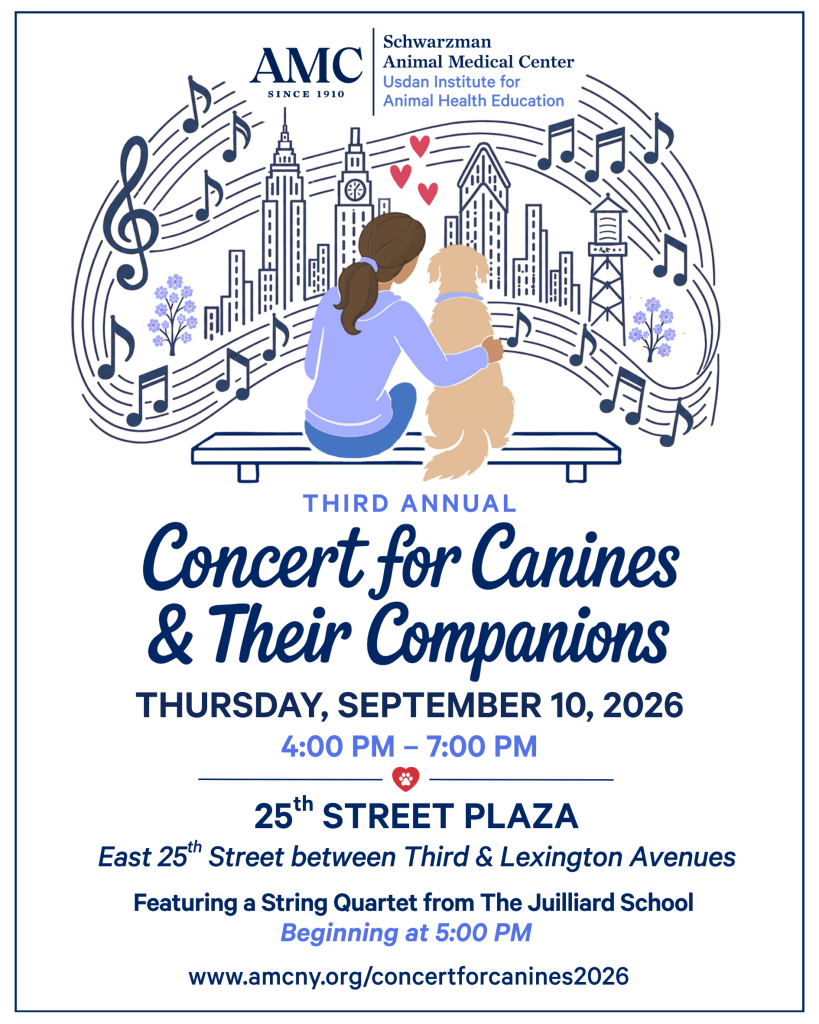
The Animal Medical Center’s Usdan Institute for Animal Health Education is hosting our Third Annual Concert for Canines & Their Companions on Thursday, September 10, from 4:00–7:00 PM at 25th Street Plaza, located on East 25th Street between Third and Lexington Avenues.
The event will feature a string quartet from The Juilliard School performing a mix of classical and contemporary music, along with refreshments for people and pets, useful pet health resources, giveaways, and a photo booth where you can take home a special portrait with your dog.
For more information about this unique event bookmark this page on AMC’s website.