
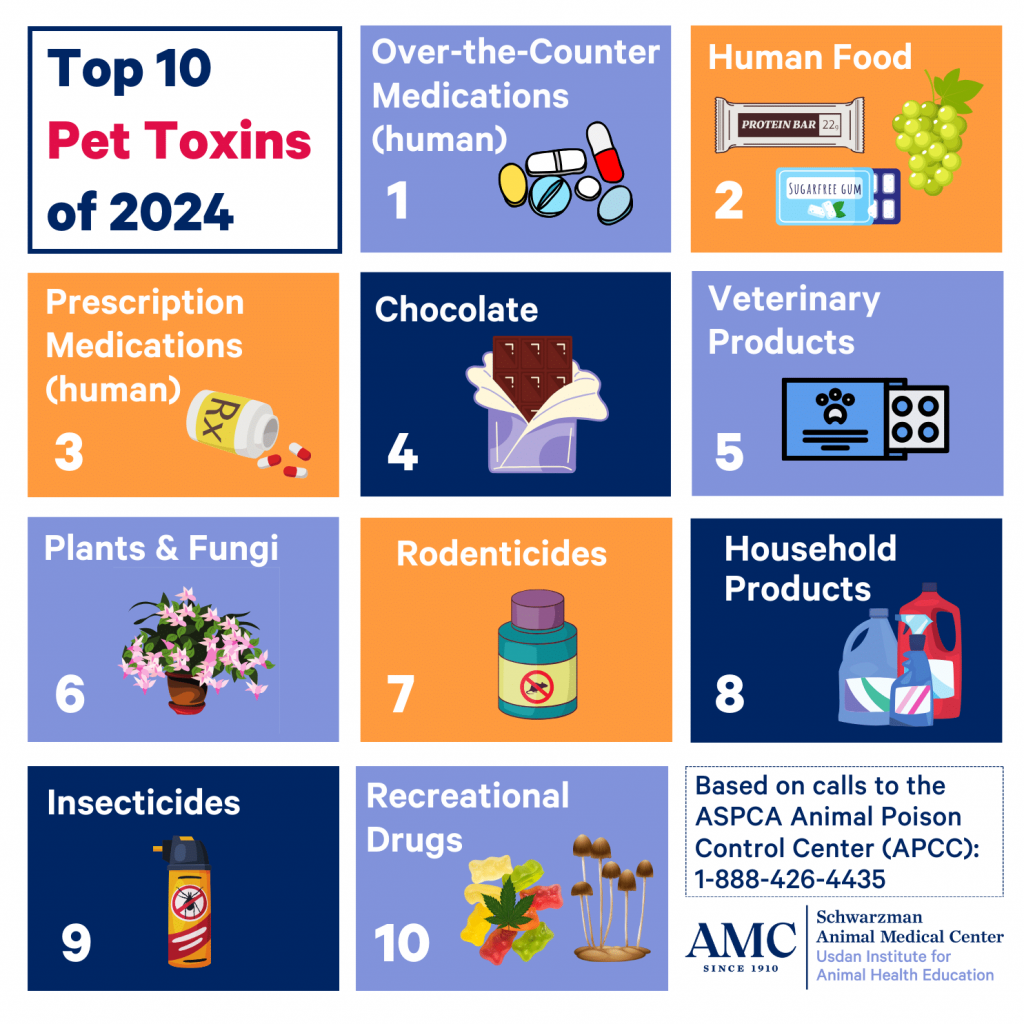
Usually, I write about what your pet shouldn’t eat, like foods that aren’t safe to share, toxic household products, and substances that can damage their kidneys. While this information is helpful for pet-proofing in the home, pets are clever and thwart your best efforts at protecting them. If your dog or cat eats something they shouldn’t, here are steps you can take to deal with this type of emergency.
Call an Animal Poison Hotline
If your pet just ate something, and you’re not sure if it’s potentially toxic, check the information available on the reliable, pet poison websites below.
Pet Poison Hotline | 855-764-7661
ASPCA Animal Poison Control | 888-426-4435
If the websites don’t answer your question, call their helplines.
The helplines accept calls from pet owners for a fee. You describe what your pet has eaten, and if the hotline recommends a trip to the animal ER, the same fee you paid for their advice covers any additional calls the ER veterinarian needs to make to the hotline for advice regarding treatment of your pet.
For more pet safety tips, follow #UsdanPetTips on AMC’s on social media accounts: @TheAnimalMedicalCenter on Facebook and @amcny on Instagram.
Going to the Animal ER
If you need to go to the emergency room, you can be especially helpful to the ER veterinarians by taking the bottle, bag or box of what your pet ate with you. On the way, think about how full the container was and how much your pet might have eaten. These two steps help the ER staff identify the exact product and estimate the dose consumed, helping them to adjust treatment and follow up recommendations.
If Your Pet Swallows an Object
The veterinarians at the Schwarzman Animal Medical Center remove many items that get stuck in the intestines of pets. This often requires surgery. If your pet eats something that could get stuck, go to the animal ER immediately. The faster you get to the ER, the greater the chance the object is still in the stomach and can be removed without surgery, using an endoscope. We remove balls, ribbon, string, rocks and all manner of non-food items from pets’ stomachs using our endoscopes. Once the object leaves the stomach and moves to the intestines, surgery is typically required.
Prepare for Pet Emergencies Before They Happen
Of course, the best time to plan for an emergency is before one happens. Since September is FEMA’s National Preparedness Month, AMC’s Usdan Institute for Animal Health Education has created a Pet Emergency Planning Guide with additional suggestions to help you be prepared for an emergency situation with your animal family member.