
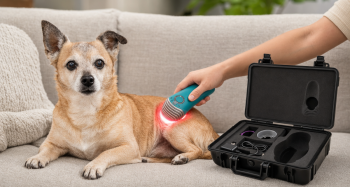
I first learned about the MedcoVet Luma while searching for specialized treatment options for my senior Chihuahua’s arthritis. Kio is 16-years-old, but until about six months ago, you’d have thought he was much younger. A 10-pound Chihuahua with the energy and confidence of a dog four times his size, he lived for his twice-daily walks and periodic sprints through the backyard.
So when I started noticing the changes, the shift was hard to ignore and even harder to accept. Kio was moving more slowly on our walks, favoring his right rear leg, and hesitating before jumping onto the couch, something that had always been effortless for him.
I knew he had arthritis, but watching the symptoms take hold was heartbreaking. To complicate matters, Kio has elevated liver and kidney values, which means traditional pain medications aren’t an option for him.
My vet recommended in-clinic laser therapy two to three times a week, but the reality of that plan felt overwhelming. Kio dreads the 40-minute car ride, and the chaos of the clinic heightens his stress. I couldn’t shake the feeling that putting him through that multiple times a week might do more harm than good. On top of that, I wasn’t sure how I’d manage the time commitment or the ongoing cost.
I was determined to find a solution that would work for both Kio and me. That’s when I discovered red light therapy and the Luma.
What Is Red Light Therapy?
Red light therapy uses specific wavelengths of light to penetrate tissue and stimulate cellular healing through a process called photobiomodulation (PBM). The light activates mitochondria, the structures within cells responsible for energy production, increasing ATP output, reducing inflammatory signaling, improving local circulation, and supporting tissue repair.
The therapy is non-invasive, drug-free, and carries no known side effects when used at the correct dosage with proper guidance. Photobiomodulation is routinely used for conditions including:
Osteoarthritis and joint inflammation
Muscle sprains and strains
Hip dysplasia
Intervertebral disc disease (IVDD)
CCL and ACL injuries
Post-surgical recovery
Wound healing and certain skin conditions, like hot spots
General stiffness and mobility support
How Does Red Light Therapy Differ From Clinical Laser Treatments?
Clinical laser therapy uses highly focused, high-powered light to drive energy deeper into the body. While this intensity can improve penetration, it also generates significant heat, requiring the clinician to keep the laser in constant motion to prevent burns. As a result, the light isn’t always concentrated on a single problem area for long, and some of the energy is dispersed to surrounding tissue rather than consistently targeting where it’s needed most.
By contrast, red light therapy devices designed for home use rely on lower-powered light (often LEDs), which are much safer for regular use. Though less intense, well-designed devices can deliver therapeutic light directly to a targeted area for longer periods without the same risk of heat buildup.
And then there’s the MedcoVet Luma. Designed to bridge the gap between clinical laser therapy and typical home LEDs, the Luma offers higher light output while remaining safe to use without constant movement. This allows for more consistent, targeted delivery of light to the treatment area, combining effectiveness with the practicality and safety needed for at-home care.
What I Learned While Researching the MedcoVet Luma
MedcoVet started as a veterinary wound care company. Based on the results their clients were achieving, vets began requesting the Luma for pet parents seeking an affordable at-home treatment option. Since then, more than 7,000 pets have been treated using the Luma platform.
The Luma is a clinical-grade LED device delivering red light at 635 nm and infrared at 850 nm, the two wavelengths with the strongest research backing for pain relief, inflammation reduction, and tissue repair. It comes with an optical comb attachment, a companion app that walks you through every session, and a consultation with a licensed veterinary clinician who builds a personalized treatment protocol for your dog before you ever turn on the device.
Why The Luma Stands Out
1. Correct Dosing Matters
Using red light therapy at home involves more than waving the device above your dog’s sore spots. Too little light produces no therapeutic effect, but too much can actively inhibit healing, cause oxidative stress, or delay tissue repair. The correct dose depends on your dog’s size, the condition being treated, and the density of their coat.
The Luma addresses this with a clinician consultation included with every purchase. Before you use the device, a licensed veterinary clinician reviews your dog’s condition, size, coat type, and treatment goals, and builds a protocol tailored to your dog’s specific needs. As they respond to treatment, your clinician adjusts the dose accordingly.
This stands in stark contrast to other devices, which tend to generalize their protocols in a one-size-fits-all blurb on the back of the box.
2. Effective Treatment On Your Schedule
Clinical guidelines for veterinary PBM recommend 18 to 24 sessions over the course of treatment for most orthopedic and inflammatory conditions. At $50 to $100 per clinic session, two to three times a week, that’s $100 to $300 per week before factoring in travel time, scheduling logistics, or how your dog tolerates being in a clinical environment two to three times a week.
The pattern that follows is familiar to many pet parents. Things go well at first, and you start seeing results. Then life gets busy. Appointments get pushed, treatments drop from twice a week to once a month, and all that early progress fades. The Luma makes completing the full treatment arc realistic for families with real lives and real budgets.
3. The Fur Factor
Studies show that up to 80% of the light emitted by a standard therapy device can be absorbed or reflected by a pet’s coat before reaching the skin, particularly with infrared wavelengths critical for reaching deeper tissue. A device that looks impressive on paper might deliver a fraction of the effective dose if fur is getting in the way.
The Luma’s optical comb attachment gently parts the fur and positions the light emitter directly against the skin, eliminating the air gap responsible for most light loss. When I looked at other at-home devices, even well-regarded ones, most simply told users to hold the device a centimeter or two from the coat.
My Personal Experience with the Luma
The Ordering Process
Ordering the MedcoVet Luma was straightforward and surprisingly personal from the beginning. Before purchasing, I scheduled the free 30-minute clinician consultation offered through MedcoVet’s website and spoke by phone with Cathy Symons, a veterinary rehabilitation specialist with more than 35 years of experience in veterinary care, canine rehabilitation, senior pet support, and palliative care.
Unlike many pet wellness products that leave you to figure things out on your own, the process immediately felt medically guided and highly individualized.
Cathy took the time to discuss Kio’s arthritis, mobility challenges, and elevated kidney and liver values in detail, and she followed up several times by email afterward to answer questions and help guide the treatment plan. After the consultation, ordering the device itself was simple, and shipping was quick.
I appreciated that the focus wasn’t on selling me a generic device, but on determining whether the Luma actually made sense for Kio’s specific condition and limitations. Cathy even offered alternative solutions to try if the Luma didn’t work for Kio.
Pet parents who purchase a Luma device can take advantage of a 14-day trial period to see how it works for their pet, which is the option I chose for Kio. For pet parents who prefer a lower-commitment option, Luma is also available to rent, though rentals do not include the trial period.
Unboxing and Setup
A black box contains the MedcoVet Luma, charging equipment, accessories, and instruction card.
The Luma arrived carefully packaged with everything needed to get started immediately. Inside the box were the handheld device itself, the optical comb attachment, a spacer for treating wounds and surgical incisions, charging accessories, and instructions for downloading and connecting the companion app.
My first impression of the device was that it felt much more substantial and clinical-grade than the smaller wellness gadgets I had looked at online. The optical comb attachment especially stood out because it’s specifically designed to part the fur and place the light directly against the skin, which is important since so much therapeutic light can otherwise get blocked by a dog’s coat.
Setting up the app was simple and intuitive. The app walked me through creating Kio’s profile, including his age, size, coat type, mobility issues, and medical history. From there, the assigned clinician created a personalized treatment protocol tailored to Kio’s arthritis, luxating patellas, and overall condition.
The clinician consultation itself was one of the most reassuring parts of the experience. Because Kio cannot safely take NSAIDs or steroids due to elevated kidney and liver values, I’ve had to be extremely careful about treatment options. The consultation felt individualized rather than scripted, and I appreciated being able to discuss exactly where Kio was struggling most and which areas should be treated.
For Kio, the recommended treatment areas were:
both hips
both knees
the lower spine
The First Few Treatments
The actual treatment sessions were much easier than I expected. The app guided me step-by-step through each of these sessions, including where to place the device and how long to treat each area. That support made the process feel much less intimidating, especially in the beginning.
Kio tolerated the treatments extremely well from day one. The sessions are quiet, non-invasive, and don’t generate uncomfortable heat, so he remained relaxed throughout them. In many cases, he seemed calmer during treatment than he typically is during other types of handling or therapy.
Over the course of Kio’s 14-day trial, I began to notice gradual yet meaningful improvements in his mobility and comfort.
The biggest changes I observed were:
moving faster around the house
stronger, more confident movement climbing his ramp onto the couch
improved endurance on walks
tiring more slowly during activity
One of the most noticeable improvements involved his right rear leg. Before starting treatment, Kio would occasionally drag his rear paw while walking, and I could often hear the scraping sound against the pavement during our walks. By the end of the trial period, I noticed that happening significantly less often.
I also saw improvements in his nighttime comfort. Previously, he would wake up and reposition himself multiple times overnight as if he couldn’t get comfortable. During the trial, he appeared to sleep more soundly and stay settled for longer stretches.
The app support genuinely made a difference in consistency. Having clear guidance and a structured protocol helped me stay on schedule and gave me confidence that I was using the device correctly rather than guessing about treatment timing or placement.
What Surprised Me Most
What surprised me most was not necessarily the dramatic nature of the improvements, but how many small functional improvements added up over a relatively short period of time.
Kio simply seemed more comfortable in his body.
The reduced paw dragging especially stood out to me because it was such a specific, measurable change that I wasn’t expecting to notice so clearly. His increased stamina on walks and improved ability to climb onto the couch also made daily life feel more normal for him again.
If I had one honest note, it’s that red light therapy is not an instant fix. The improvements were gradual and cumulative rather than immediate. Consistency mattered, and I can see why the app-guided protocols and clinician oversight are such an important part of the process.
Would I Recommend the MedcoVet Luma to Other Dog Parents?
For aging dogs struggling with arthritis, stiffness, or declining mobility, the MedcoVet Luma is worth serious consideration. But it’s not just for dogs like Kio who can’t take traditional anti-inflammatory medications. It can also be helpful as part of a more comprehensive arthritis management plan that includes medications, supplements, rehab, and other supportive care.
If you are a pet parent looking for additional ways to improve your dog’s comfort and quality of life, consider these benefits of the MedcoVet Luma:
gentle and non-invasive
clinically guided treatment
at-home convenience
personalized dosing
a non-drug approach to mobility support
After completing the 14-day trial, I genuinely feel that Kio is moving more comfortably, staying active longer, and resting better at night. For a senior dog with chronic orthopedic issues, those quality-of-life improvements matter enormously.
What Other Dog Parents Are Saying
In addition to my review, the MedcoVet Luma has more than 100 testimonials from pet parents whose dogs, cats, and even horses have experienced pain relief, faster healing, and increased comfort.
“Rose had been getting in-office deep laser treatments. The treatments were wonderful, but wore off pretty quickly. Thanks to the Luma, she gets more frequent treatments in more areas than ever before. She can walk longer, sleeps better, and is excited for her walks! The Luma has made a huge improvement in her quality of life!”
– Richelle Krotts, Rose’s mom
“Zü has epilepsy, and one particularly bad seizure damaged her back. The Luma helped significantly with her back pain and cut down on the number of visits we had to make to the vet for in-office treatment.”
– Jessamyn, Zülli’s parent
“The Luma helped Banjo with his arthritic knees, and I’m convinced it lengthened his life. Banjo was an English Labrador retriever, and he lived to the ripe old age of 14!”
– Rebecca Reigelsberger, Banjo’s parent
“Ruger has always been a dog who finds joy in running, hiking, and wrestling with other dogs. After tearing his CCL and having knee surgery at 9 years old, I was heartbroken seeing him uncomfortable. Incorporating Luma into his rehab treatment plan sped his healing, offered him relief, and ultimately contributed to him getting back to his active self.”
– Becky Reiss, Ruger’s parent
How to Get Started
Step 1: Book a Free Clinician Consultation
Book a 30-minute consult with a licensed veterinary clinician, no purchase required, where they’ll assess your dog’s condition and give you an honest assessment of whether the Luma is appropriate.
Step 2: Order and Activate
The device ships with everything you need, and the app guides you through setup, connects you with your assigned clinician, and lets you access your custom protocol from the first session.
Limited-Time Offer: Save $100 on the Luma.
Frequently Asked Questions About the MedcoVet Luma
What is the MedcoVet Luma, and how does it work?
The Luma is a clinical-grade LED red light therapy device designed for home use with pets. It delivers red light at 635 nm and infrared light at 850 nm, the two wavelengths with the strongest research support for pain relief, reduced inflammation, and tissue repair.
Is red light therapy the same as laser therapy?
No. Laser therapy uses a focused, high-powered laser beam administered by a trained professional. Red light therapy uses LED-based light, which is safer for home use with proper guidance.
Is red light therapy safe to use at home?
Yes, when used with proper dosing and guidance. The Luma operates within the therapeutic range, and the optical comb delivers light directly to the skin without the heat associated with high-powered clinical devices. It is also safe on the eyes. No goggles required for you or your pet.
Why does dosing matter?
Too little light produces no therapeutic effect, while too much can inhibit healing or cause oxidative stress. MedcoVet’s clinician-built protocol ensures your dog receives the right dose for their individual situation.
What conditions does the Luma support?
Arthritis and joint inflammation, hip dysplasia, IVDD, CCL and ACL injuries, post-surgical recovery, wound healing, hot spots, and general stiffness and mobility challenges in senior dogs.
How does the optical comb work?
Studies show up to 80% of light from therapy devices can be lost to a pet’s coat. The comb gently parts the fur and places the emitter directly against the skin, eliminating that light loss.
How often should my dog use the Luma?
Frequency varies by condition and treatment phase. Clinical guidelines generally recommend two to three sessions per week during induction, tapering as the dog responds. Your clinician specifies the right schedule and updates it over time.
Does it work on dogs with thick coats?
Yes. The optical comb was designed to part the coat and place the light source directly against the skin, so coat thickness does not reduce effectiveness.
How does the cost compare to clinic-based therapy?
Clinic laser therapy runs $50 to $100 per session, two to three times weekly, totaling $100 to $300 per week. Most families find that pace unsustainable over the 18 to 24 sessions recommended by clinical guidelines. The Luma is a one-time investment that makes the right frequency achievable.
A Smart Approach to Pain and Mobility Support
Watching a dog you love slow down is genuinely hard, and watching it happen when the most obvious medical options are off the table adds a particular kind of difficulty. The search that follows, for something credible, sustainable, and that actually fits your dog’s situation, is real work.
For a dog like Kio, who can’t take traditional medications and needs something clinically credible and logistically realistic, the Luma makes a compelling case. The no-commitment clinician consultation is a low-risk way to find out whether it makes the same case for yours.
Set up your consultation at medcovet.com and save $100 on the MedcoVet Luma.
The post The Red Light Therapy Device That Changed How I Treat My Senior Dog’s Arthritis appeared first on iHeartDogs.com.