
You may have seen Vital Farms’ cartons in the grocery store—the ones with illustrations of cheerful hens and big‑font promises like “organic” and “pasture‑raised” splashed across them. The whole package is designed to make you imagine a false reality in which hens wander freely on a peaceful farm. It’s “misleading marketing” 101.
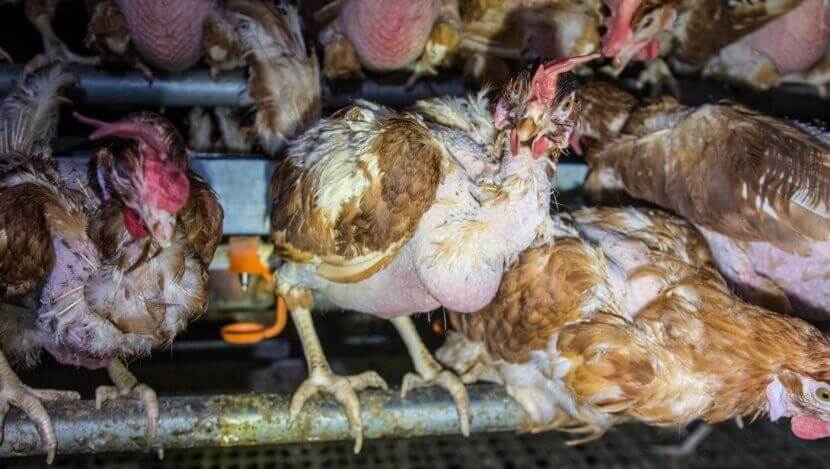
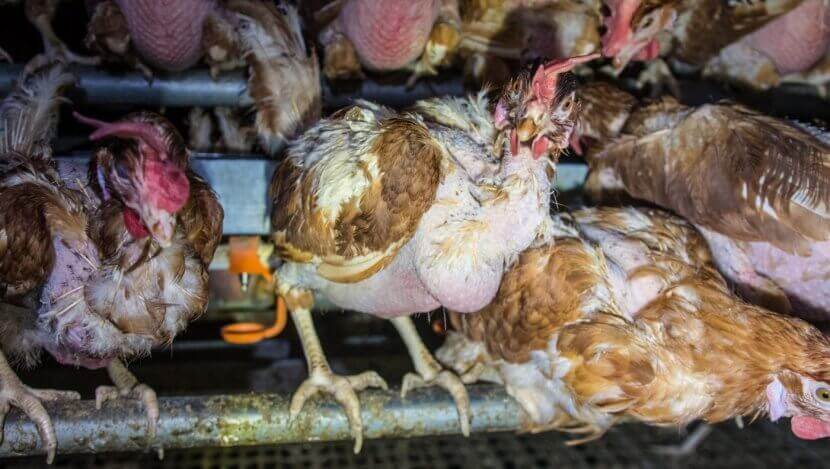
Vital Farms has built its brand on a deceptive promise: that the eggs it sells come from “happy hens” on “certified humane” farms. But Vital Farms suppliers cram birds into crowded, filthy sheds and cut or burn off the tips of their sensitive beaks.
Meanwhile, shoppers are duped into paying two, three, or even more times the price of “conventional” eggs—all because Vital Farms’ marketing convinces them there’s such a thing as “humane” exploitation.
PETA Challenges Vital Farms
Before Vital Farms’ annual shareholder meeting in Austin, PETA submitted a question: “When will the company stop promoting its eggs as ‘humane’ and hens as ‘happy,’ when they are neither?” We bought stock in the company to push for change from the inside—and, we’re letting it know that its “humane” narrative won’t go unchallenged.
The Pasture‑Raised Promise vs. the Reality
Vital Farms’ branding leans heavily on idyllic imagery—hens roaming on lush grass, pecking in the sunshine, living a serene, pastoral life. The company proudly touts its “Certified Humane” status, but that certification allows cruelties most consumers would never associate with humane treatment. Here’s what really happens to hens exploited by Vital Farms for eggs:
When birds are often just days old, suppliers sear off the tips of their beaks to prevent them from pecking and cannibalization—behaviors that emerge under extreme stress and crowding.
Hens spend the first five months of their lives inside windowless sheds.
Adult hens are transferred to farms where extreme temperatures—ranging from as low as 19 degrees to as high as 95 degrees—mean they’re either outside at risk of death or kept locked indoors for much of the year. Chickens begin experiencing heat stress at 77°F. Many die when temperatures exceed 91°F.
PETA’s recent white paper on “cage-free” eggs documents how these conditions are not exceptions, but the norm across the industry.
What Happens When Hens Stop Laying Eggs
A hen’s natural lifespan is 8 to 10 years. But the egg industry kills them at around 1.5 years old, when their bodies can no longer make enough eggs to be profitable. At slaughterhouses, workers shackle the hens upside down before sending them through an electrified water bath intended—but often failing—to stun them. Many are scalded to death in defeathering tanks after the blade meant to slit their throats misses.
These cruelties are the industry standard. But they stand in stark contrast to Vital Farms’ marketing language about “ethical” eggs and “happy hens.”
Why This Matters Beyond One Company
Chickens have friends and families, dream when they sleep, and worry about the future, just as humans do. They feel joy, pain, and fear. They are individuals who value their own lives. There is no way to “humanely” exploit someone else.
What Comes Next for Vital Farms?
Vital Farms cut its shareholder meeting short after barely ten minutes, refusing to engage investors and answer our question about whether its marketing matches the suffering documented on its farms and supply chain. But we’re not backing down. At the very least, consumers deserve honesty and transparency—and we’ll keep pushing until they get it.
What YOU Can Do
The only truly humane foods are vegan! There are countless animal-friendly options—from tofu scramble to plant‑based eggs like Just Egg—that let you enjoy egg-free meals without cruelty.
Vegan eggs are healthier for you and spare hens a lifetime of suffering.
If you haven’t made the compassionate switch yet, you can order PETA’s free vegan starter kit, which walks you through everything you need to get started.
And if you’ve been misled by “humane‑washing” labels, tell PETA so we can keep holding companies accountable.
The post PETA Confronts Vital Farms Over Its ‘Happy Hen’ Marketing appeared first on PETA.