
Alpha-gal syndrome, which can develop after a bite from the Lone Star tick, can trigger allergic reactions to animals’ flesh and dairy. As the condition has spread on Martha’s Vineyard, more people have had to rethink what they eat—fast.
Visitors heading to Martha’s Vineyard this summer may spot something new on menus across the island: more hearty vegan dishes than ever. And for many locals, this shift didn’t start as a trend; it started with a tick bite.
But here’s the upside: Once you step away from meat and dairy, you discover a world of food that’s bold, satisfying, and—most importantly—kind to animals. What begins as “I can’t eat that anymore” can turn into “Wait … why did I ever?”
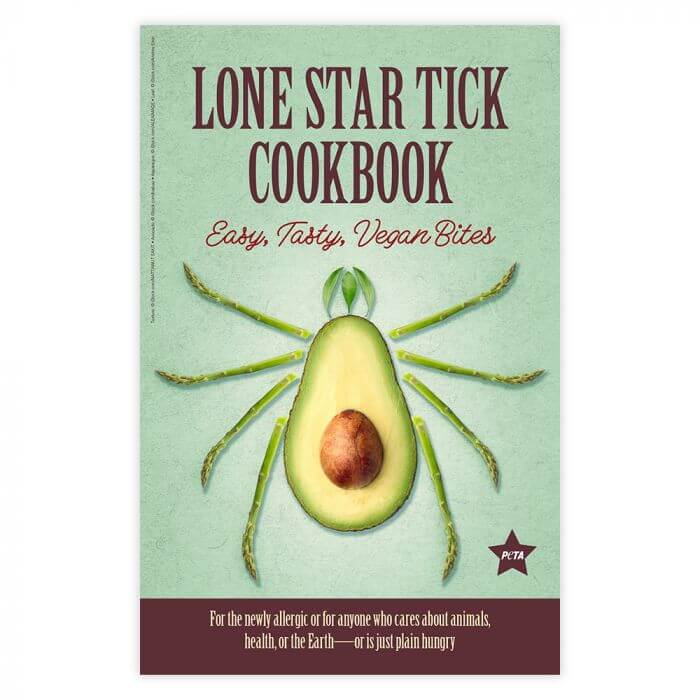
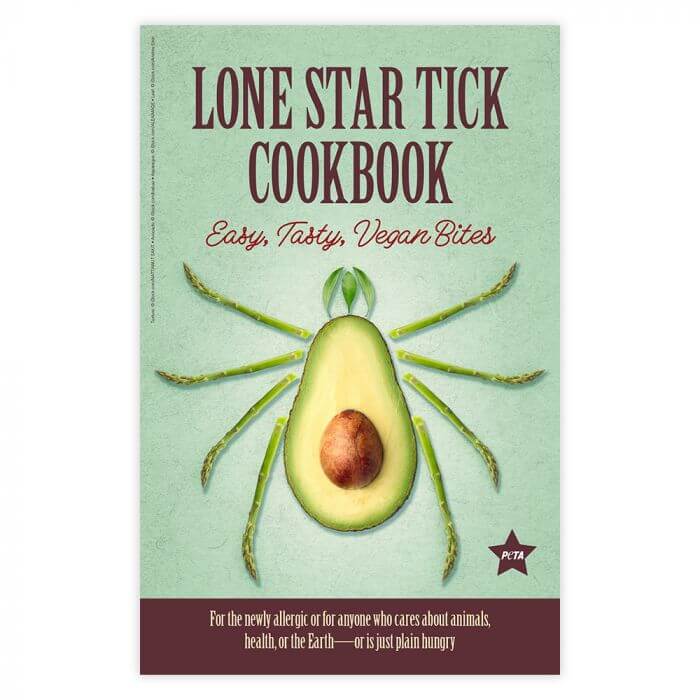
That’s exactly why PETA created Lone Star Tick Cookbook: Easy & Tasty Vegan Bites, a practical, crave-worthy guide for anyone navigating alpha-gal (or anyone ready to eat better without harming our fellow animals).
The Lone Star Tick Cookbook: Your Guide to Kind, Crave-Worthy Meals
Tailor-made to satisfy even the staunchest of carnivores, PETA’s Lone Star Tick Cookbook features recipes such as Philly “cheesesteaks,” slow-cooker Texas chili, and vegan sausage, biscuit, and gravy sandwiches—and every one of the delicious dishes is 100 percent tick bite allergy–proof.
So if alpha-gal encouraged a change, let this be the part where you realize you didn’t lose options—you gained them.
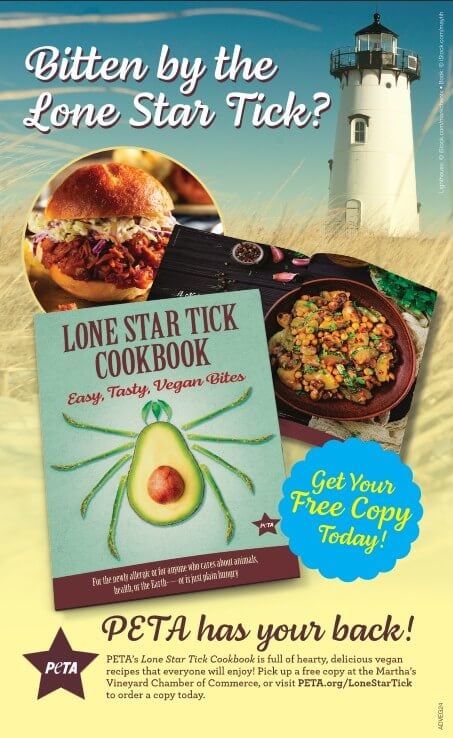
PETA’s full-page ad in the 2026 annual Martha’s Vineyard Guide directs readers to our helpful cookbook, which is now available for free at the Martha’s Vineyard Chamber of Commerce.
Why You Should Go Vegan (Even If Alpha-Gal Didn’t Force Your Hand)
Animals aren’t ingredients, they’re individuals. Pigs are soothed by music, cows mourn when a loved one dies or when they’re separated from their families, and hens sing to their chicks before they even hatch. Yet in the meat, egg, and dairy industries, these individuals can’t bask in the sun, graze, play, or even breathe fresh air. Their lives are marked by pain, fear, and misery—and none of them consented to any of it.
Meanwhile, animal agriculture is a leading driver of the climate catastrophe, producing vast amounts of greenhouse gas emissions, fueling deforestation, and polluting waterways with waste and runoff that devastate ecosystems.
But YOU can do something about it. Every person who goes vegan spares nearly 200 animals each year, dramatically reduces their carbon footprint, and lowers their risk of heart disease, stroke, diabetes, obesity, and certain types of cancer.
Once you go vegan, you’ll only wish you’d done it sooner. Ready to start? PETA’s free vegan starter kit and Lone Star Tick Cookbook make it easy.
The post Alpha-Gal Hotspot Martha’s Vineyard Gets a Hand From PETA appeared first on PETA.