
Here in New York City, summer brings heat advisories and poor air quality alerts. Those with respiratory ailments are cautioned to stay inside during the hottest part of the day. When air quality is poor, closing windows, using HEPA filters and staying indoors as much as possible is critical to maintaining healthy breathing.
Heat, humidity and poor air quality affect dogs with respiratory conditions much the same as they affect humans. Tracheas, the rigid tube connecting your dog’s throat to their lungs, can collapse due to summertime environmental changes. This blogpost will explain collapsing trachea and suggest measures you can take to protect your dog during the dog days of summer.
Do all coughing dogs have collapsing trachea?
Coughing occurs in many different canine diseases: pneumonia, a foreign object caught in the windpipe, canine distemper, asthma, allergies, bronchitis, lung cancer, and yes, collapsing trachea. Since coughing is caused by so many different processes, an x-ray of the chest is one of veterinarians’ best tests to quickly hone down the list of possibilities to one or two that we investigate more intensively.
What is collapsing trachea?
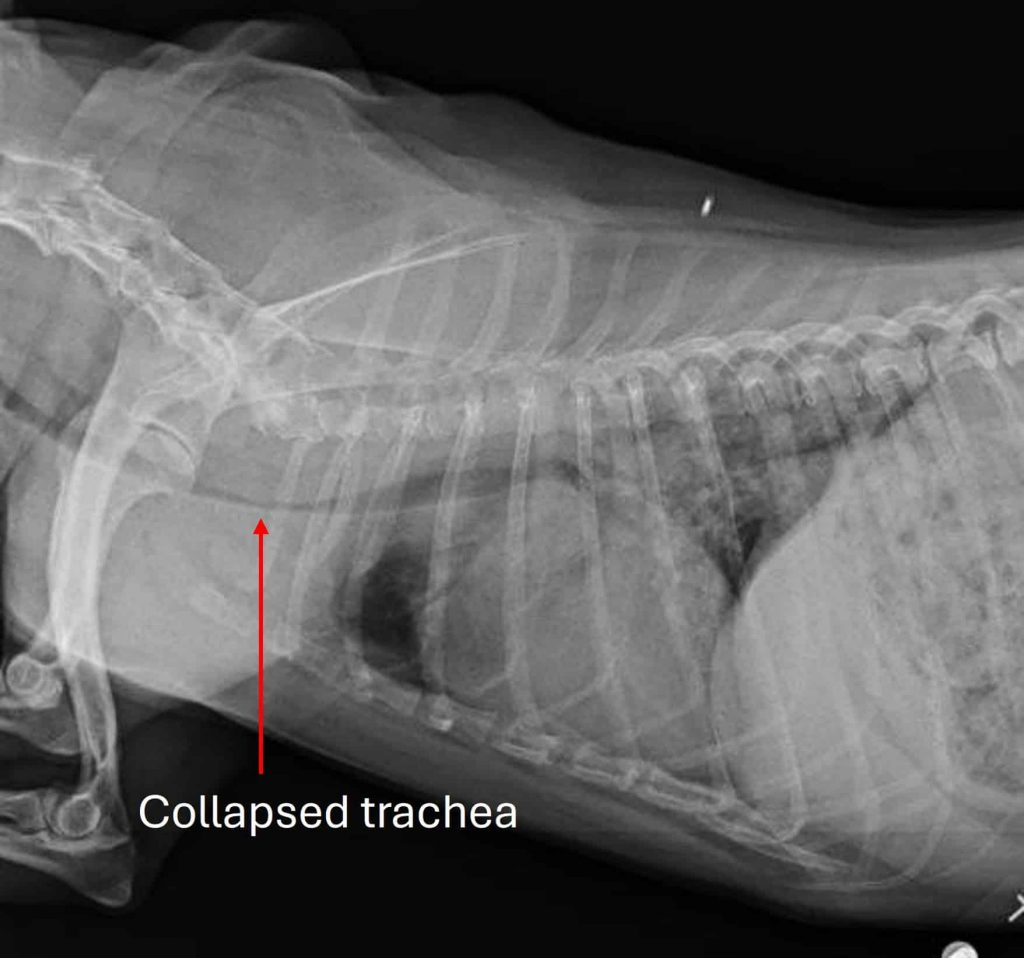
A normal trachea or windpipe is a stiff tube with evenly spaced supporting rings. The rings keep the trachea open allowing each breath to bring air in and out of the stiff tube to and from the lungs. In dogs with tracheal collapse, the rings weaken and the normally round windpipe flattens like a tube sock after you take it off. Breathing out is easy as the pressure created by expiration forces the trachea open. Breathing in is difficult as the pressure created by inspiration flattens the trachea even more. Dogs with collapsing trachea have a classic goose-honk cough which can be heard and seen on a video in the Usdan Institute’s Pet Health Library.
What dogs get collapsing trachea?
Collapsing trachea doesn’t have a specific cause, although pulling on a collar when walking on a leash or being overweight makes it worse. The genetics of small dogs cause a weaking of the support rings in the trachea leading to tracheal collapse. Maltese, Pomeranian, Poodle, and Chihuahua dogs often top the list of those with collapsing trachea. A collapsing trachea in a large dog would be a rarity.
Why is my dog with collapsing trachea worse in the summer?
Heat and humidity are major culprits in the increase in respiratory issues in the summer. Dogs cool themselves by panting. When the air is humid, panting is less effective at cooling your dog, making them more prone to overheating. Humid air is heavy and that increases the work your dog must do in order to breathe; more work generates more body heat which can result in overheating. Finally, humid air holds more pollution (smoke, ozone and particulate matter), which when inspired, is irritating to the respiratory tract.
How can I help my dog suffering from tracheal collapse?
Keep your dog at an ideal weight. Overweight dogs have more difficulty breathing. Use a harness not a collar because pulling on the collar puts pressure on the trachea. Keep your dog inside, in the air conditioning and with the air purifier on when heat, humidity and poor air quality are at their peak. You can check air quality alerts in your area at AirNow.gov.
See your veterinarian for prescription medications to help control the cough.
For more information on management of collapsing trachea, watch this Usdan Institute for Animal Health Education video on the topic.