
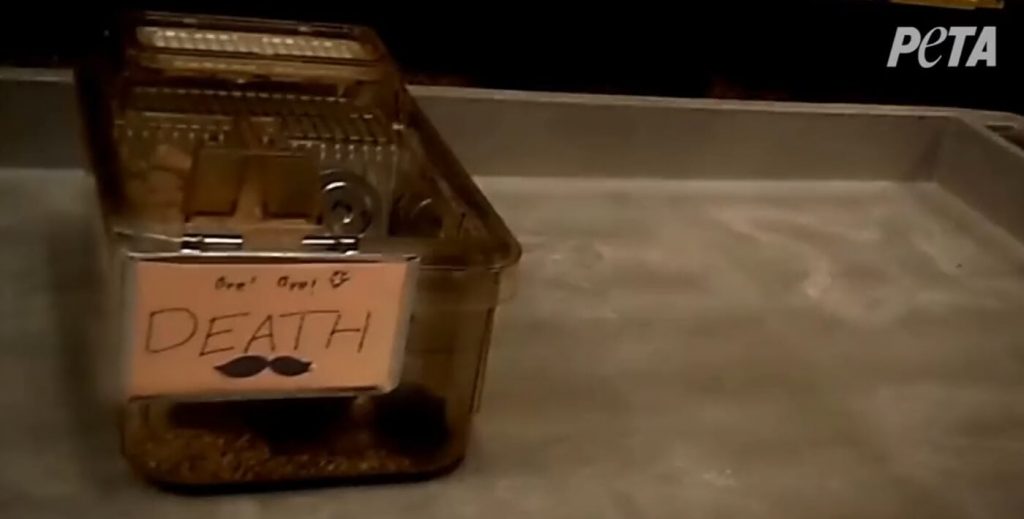
For most animals confined in the University of Massachusetts Chan Medical School’s (UMass Chan) laboratories, death is the only escape from lives of perpetual misery.
But even their final breaths are filled with pain and fear.
PETA has uncovered more than a dozen cases of animals dying slowly and painfully due to staff negligence. UMass Chan staff crammed too many animals inside gas chambers—resulting in prolonged suffering, threw live mice in the trash, stuffed newborns inside freezers, and left a hamster living among two dead cage-mates for days, among other incidents.
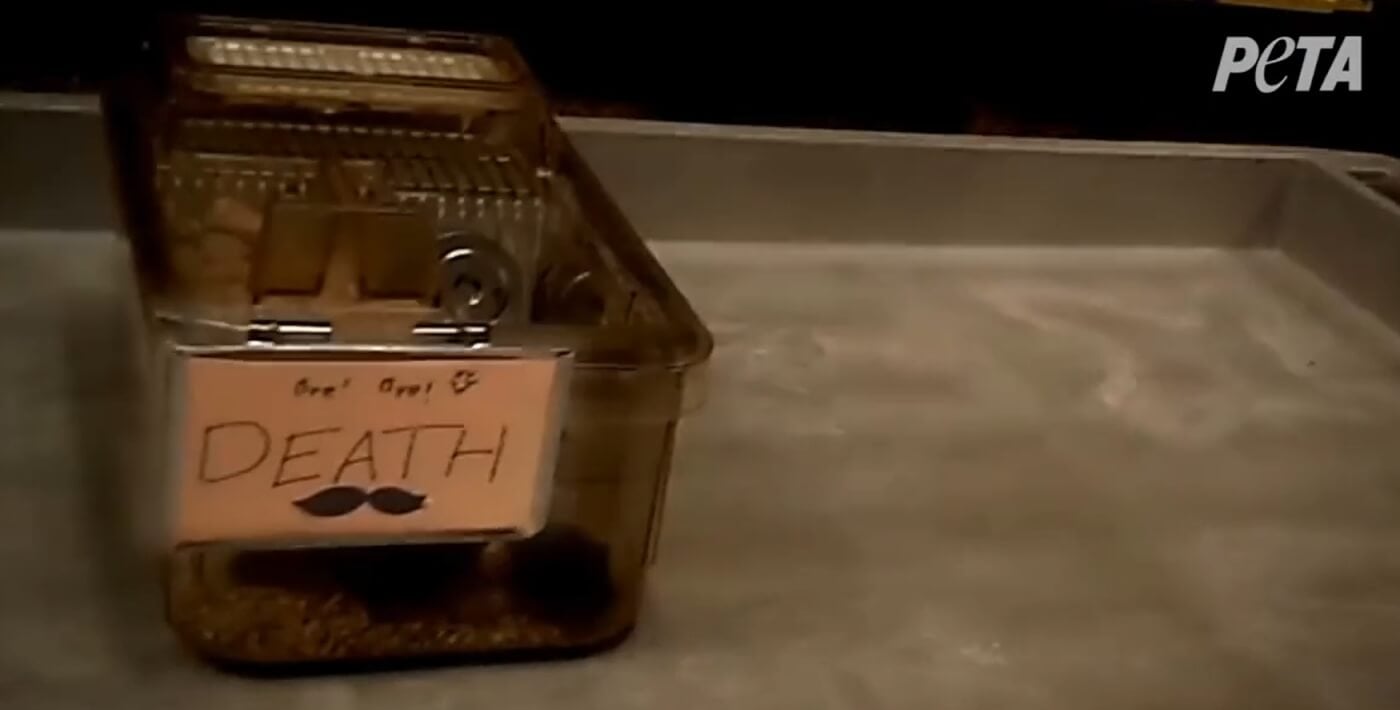
Such careless deaths violate regulations meant to minimize pain, fear, and distress. Animals are supposed to be rendered unconscious quickly during euthanasia, to reduce their suffering as much as possible. Experimenters who fail to do so deny animals the simple, final consolation of a pain-free end.
Botched euthanasia is only the final cruelty animals endure at UMass Chan.
Experimenters at the school slice open dogs to induce heart attacks and strokes, and infect animals with blood-sucking parasites. Others have bred animals to suffer painful neurodegenerative diseases before jamming needles into their spines. Still others inject viruses into mice’s brains and cut out their tongues, and subject mice to excruciating intestinal injuries before killing them.
Suffering Even in Death
PETA has found that at least 121 animals, including mice and hamsters, have suffered from botched euthanasia in UMass Chan laboratories. Records don’t indicate how many animals were involved in some incidents, so the true toll of torment is likely much higher.
So many animals have suffered sloppy deaths that the school’s animal oversight committee was forced to investigate, leading to a “no-tolerance” euthanasia policy in September 2025, warning that additional failures could lead to protocol suspensions and experimenters being permanently barred from animal work. But problems continue to stack up.
After analyzing documents obtained through public records requests, PETA uncovered the following key incidents across multiple years and laboratories:
Seven newborn mice were found alive in a carcass freezer. Twenty-four adult mice were also found in the freezer. There was no evidence that staff performed the required follow-up secondary euthanasia method, meaning the mice may have frozen to death.
Two mice were found alive in the trash along with discarded bedding and nesting material. The laboratory responsible for throwing the animals in the trash was never found.
Three hamsters, two dead and one living, were left in a cage rather than being properly euthanized after a surgery. The surviving hamster was later killed. The U.S. Department of Agriculture issued a citation and Official Warning for a critical violation of the federal Animal Welfare Act because the delayed euthanasia likely caused unnecessary pain or distress.
Experimenter Jin Zhang snapped the neck of a newborn mouse. This violated protocol because the days-old mouse was too young and small for the killing method to be effective, according to euthanasia guidelines. Read more about what PETA discovered in this rogue experimenter’s laboratory.
On three occasions over eight months, staff crammed too many mice into gas chambers, violating capacity limits designed to minimize fear, distress, and suffering. Staff also put at least 22 mice in a carcass freezer without administering the required secondary euthanasia method, meaning they could have frozen alive. Read PETA’s full report about the botched euthanasia techniques that led to experimenter Milena Bogunovic’s laboratory ban.
Five mice were found dead in an unlabeled cage and on a cart meant for empty, dirty cages. A veterinarian determined that the required secondary euthanasia wasn’t performed, which is necessary to confirm animals are dead and not suffering. Cage materials were then tossed into the trash, along with a still-living mouse, who wasn’t found until two days later. The mouse was then killed.
About 50 mice were euthanized in a gas chamber, again violating capacity limits. Staff also failed to perform the follow-up physical euthanasia as required to confirm animals are dead and not suffering. The experimenter was suspended from working with animals, and laboratory staff underwent required retraining.
Experimenters ignored their own protocol and removed animals’ lungs during a terminal surgery, rather than giving them a lethal drug dose as planned, according to an inspection report.
After gassing animals to death, an experimenter again failed to perform the required secondary euthanasia. The violation resulted in required retraining and observation of future euthanasia procedures.
What You Can Do
UMass Chan’s widespread euthanasia failures are only the latest evidence uncovered by PETA of the school’s fundamental inability to provide even the most basic care to animals confined in its laboratories. Animals have been denied veterinary care, left without food and water, and subjected to a host of other preventable suffering.
Please TAKE ACTION and urge UMass Chan to end all experiments on animals and switch to state-of-the-art, non-animal research methods:
The post PETA Exposé: Animals Suffer Slow, Painful Deaths in UMass Chan Laboratories appeared first on PETA.