
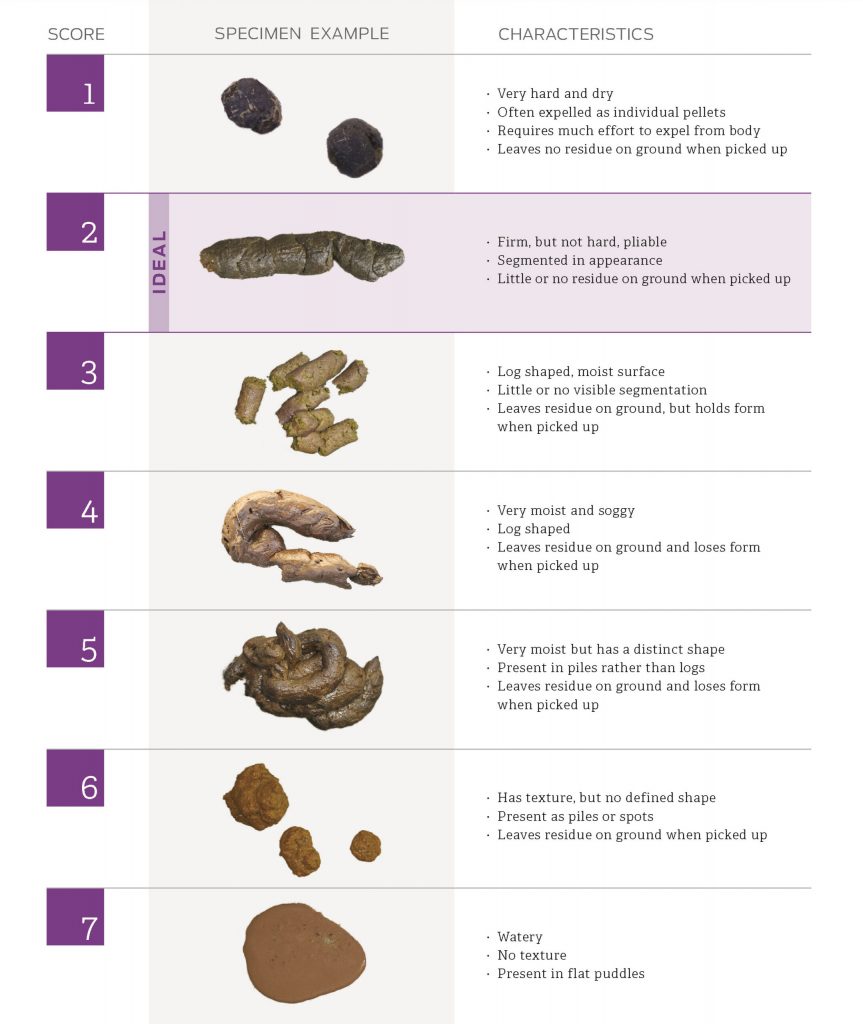
Practically every day, I get an email with a photo of patient poop. The worried owner is usually concerned about constipation or diarrhea. Assessing a pet’s stool quality is a critical part of a complete medical history — so much so that veterinarians use fecal scoring charts to quantify stool quality. This visual scale helps veterinarians communicate clearly about what is normal and what is not.
Quantifying stool quality helps veterinarians and clients to speak the same language, ensuring you and your veterinarian agree on whether your pet truly has diarrhea, constipation, or a healthy stool.
Why Firm Stool Matters
New Yorkers — and likely most urban pet owners — prefer a stool that is firm and easy to pick up without leaving a mark on the sidewalk. This translates to a fecal score of two, though a fecal score of three is still normal.
A fecal score of one indicates constipation and consists of hard, dry balls of stool that are difficult to pass. Diarrhea typically progresses from fecal score four to seven as an illness worsens. Any noticeable change from your pet’s normal stool, in either direction, suggests an underlying problem.
Photo credit: Purina ProPlan Veterinary Diets
Feed Your Pet a Consistent Diet
The number one trick to maintaining consistent stool quality is feeding a consistent diet. Rich table scraps, too many snacks or changing your pet’s diet abruptly can all result in diarrhea or constipation.
Eating the same food day after day might sound boring to us humans, but most pets are perfectly happy with consistency — and their digestive systems usually are, too.
Make Sure Your Pet Drinks Plenty of water
Most pets have free access to a water bowl or fountain and drink plenty of water on their own. However, some medical conditions cause pets to need more water than usual. The most common of these is kidney disease. When the kidneys aren’t functioning properly, they no longer regulate urine output efficiently. This can lead to increased urination and dehydration. Dehydration, in turn, can cause hard, dry stools and constipation. Encouraging pets with kidney disease to drink plenty of water is key to preventing constipation.
Fiber: Sometimes More, Sometimes Less
As contradictory as it seems, fiber can be used to treat both constipation and diarrhea. Veterinarians use different fiber sources depending on the pet’s preference.
Common fiber supplements for pets include:
Canned pumpkin
Sweet potato
Psyllium fiber (Metamucil®)
High fiber pet foods
These can all be used to treat fiber-responsive diarrhea or constipation, although finding the right amount takes some trial and error.
It’s important to note that polyethylene glycol powder (Miralax®) does not technically contain fiber. Its laxative properties stem from its ability to pull water into the stool, keeping it soft and making it easier to pass.
Understanding Prebiotics, Probiotics, and Synbiotics
The intestine has its own microbiome, which helps control stool quality. This is why antibiotics often cause diarrhea — they kill the beneficial microbiome bacteria along with the infection-causing bacteria.
There are several products designed to support a healthy intestinal microbiome:
Prebiotics feed beneficial bacteria
Probiotics contain beneficial bacteria
Synbiotics combine both prebiotics and probiotics
These days, many pet foods contain prebiotics, probiotics or synbiotics. Ingredients such as beet pulp are commonly included because they contain fructo-oligosaccharides, which nourish healthy gut bacteria.
Before starting any new diet or supplement, check with your veterinarian. I recently had a pet patient become ill from an over-the-counter probiotic.
When to Call Your Veterinarian
If your pet’s stool is not perfect, check in with your veterinarian and be prepared to use the fecal scoring chart to explain exactly what you are concerned about. When we both speak the same language, we can easily work together to make your pet better.