
A new report by PETA shows that Shigella, a highly contagious, often drug-resistant pathogen spread through fecal contamination, for which humans and other primates are the only natural hosts, is widespread and often unreported or underreported among monkeys in the U.S. experimentation industry.
The findings raise serious public health concerns as infected monkeys are transported among importers, quarantine facilities, breeders, laboratories, and universities across the country. There are more than 100,000 monkeys currently in U.S. laboratories, breeding, and holding facilities.
The Drug-Resistant Details
PETA compiled years of scientific publications, veterinary records, and institutional documents, and found that Shigella is circulating throughout the U.S. monkey experimentation industry, infecting workers, persisting in monkey colonies, and contributing to the emergence and spread of multidrug-resistant bacteria. Antibiotics are frequently used prophylactically in primates, creating conditions that drive antimicrobial resistance.
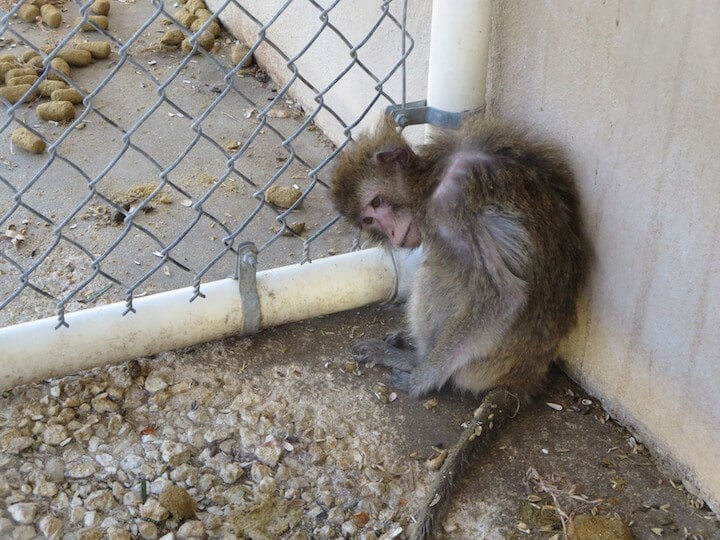
A macaque suffering from diarrhea housed at a primate importation and breeding facility in Florida. Photo obtained by PETA .
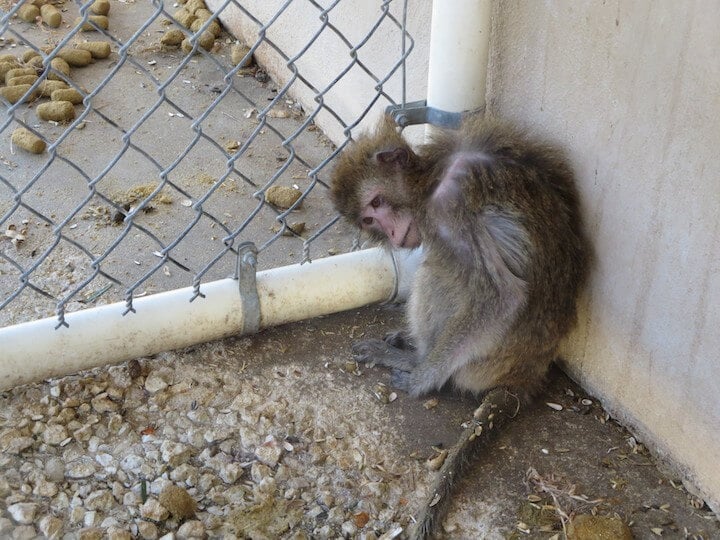
Symptoms of a Shigella infection can include severe diarrhea containing blood or pus, cramps, fever, nausea, vomiting, and, in severe cases, death.
PETA’s report comes on the heels of a recent Centers for Disease Control and Prevention (CDC) warning about rising cases of extensively drug-resistant Shigella infections in humans. Yet the agency failed to acknowledge that primates are a documented source of infection, despite the CDC’s acknowledgment that imported monkeys can carry pathogens “that may be a public health concern.”
We’re now urging the Centers for Disease Control and Prevention to release pathogen surveillance data tied to primate experimentation, including Shigella prevalence, antimicrobial resistance profiles, and documented worker exposures. The CDC cannot warn the public about rising drug-resistant Shigella infections while withholding information.
Case Study: University of Washington’s Primate Prison
The University of Washington (UW) is home to one of the seven federally funded National Primate Research Centers. An attendee at a University of Washington Safety Committee meeting observed, “Virtually everyone who works in the [primate] units gets ill at some point in their first 6 months, due to meeting staph and Shigella for the first time and being around aerosolized fecal matter.”
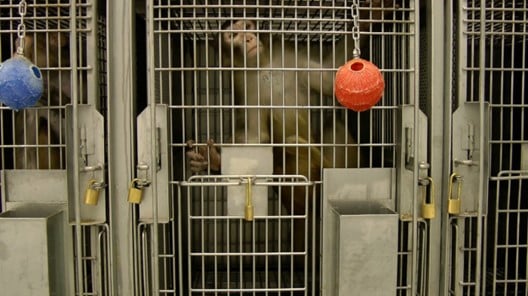
A monkey caged at the WaNPRC. Image obtained by PETA via the Washington State Public Records Act
PETA has found that UW authorized a shipment of monkeys with contagious gastrointestinal diseases. Just days after 68 monkeys were trucked from the University of Washington’s breeding facility in Arizona to Seattle in September 2023, 47 tested positive for Shigella. Yet, UW’s veterinarian certified that the animals had zero signs of infectious disease. One of the monkeys was dead on arrival in Seattle.
What You Can Do
U.S. Reps. Greg Steube (R-Fla.-17) and Dina Titus (D-Nev.-01) have introduced a groundbreaking bill that would ban the import of monkeys destined for laboratories or their suppliers.
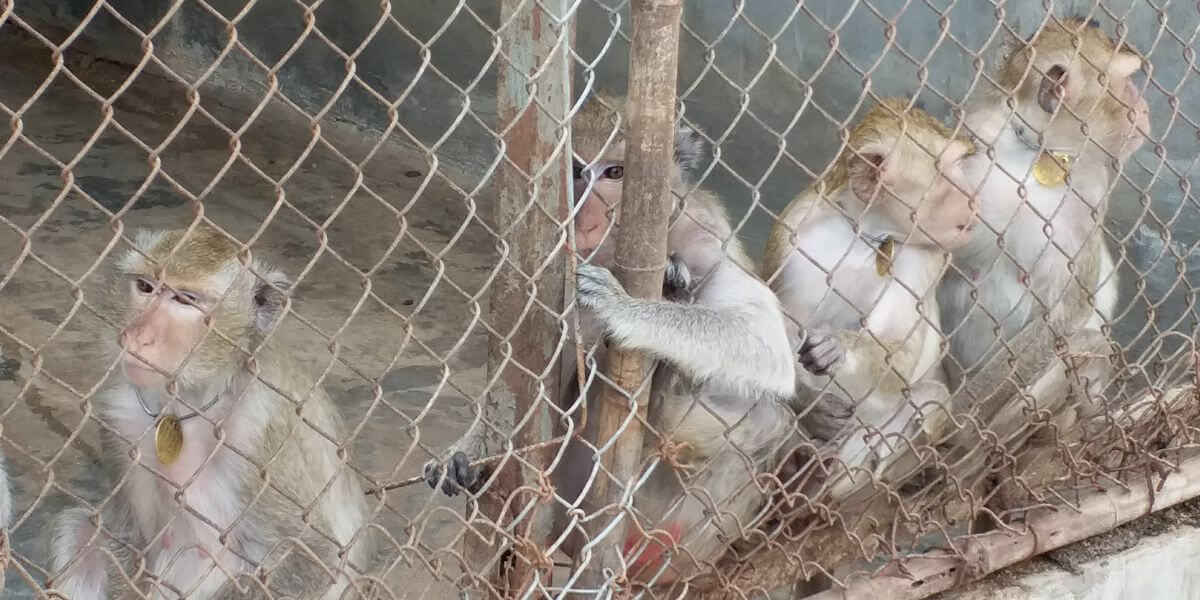
The bipartisan Preventing Risky Importation of Monkeys to Avoid Toxic Exposures (PRIMATE) Act (HR 8471) would end the introduction and spread of pathogens that accompany monkeys caught up in importation for use in experimentation.
Please TAKE ACTION to urge your Congressional representative to co-sponsor this bill:
The post Report: Monkey Experimentation Industry Harbors Drug-Resistant, Diarrheal Disease appeared first on PETA.